Restaurant Instagram Carousels: Menu Showcases That Drive Bookings
Every restaurant has a dish that makes people pull out their phones. The problem is that a single photo rarely does justice to what makes your food and experience worth visiting.
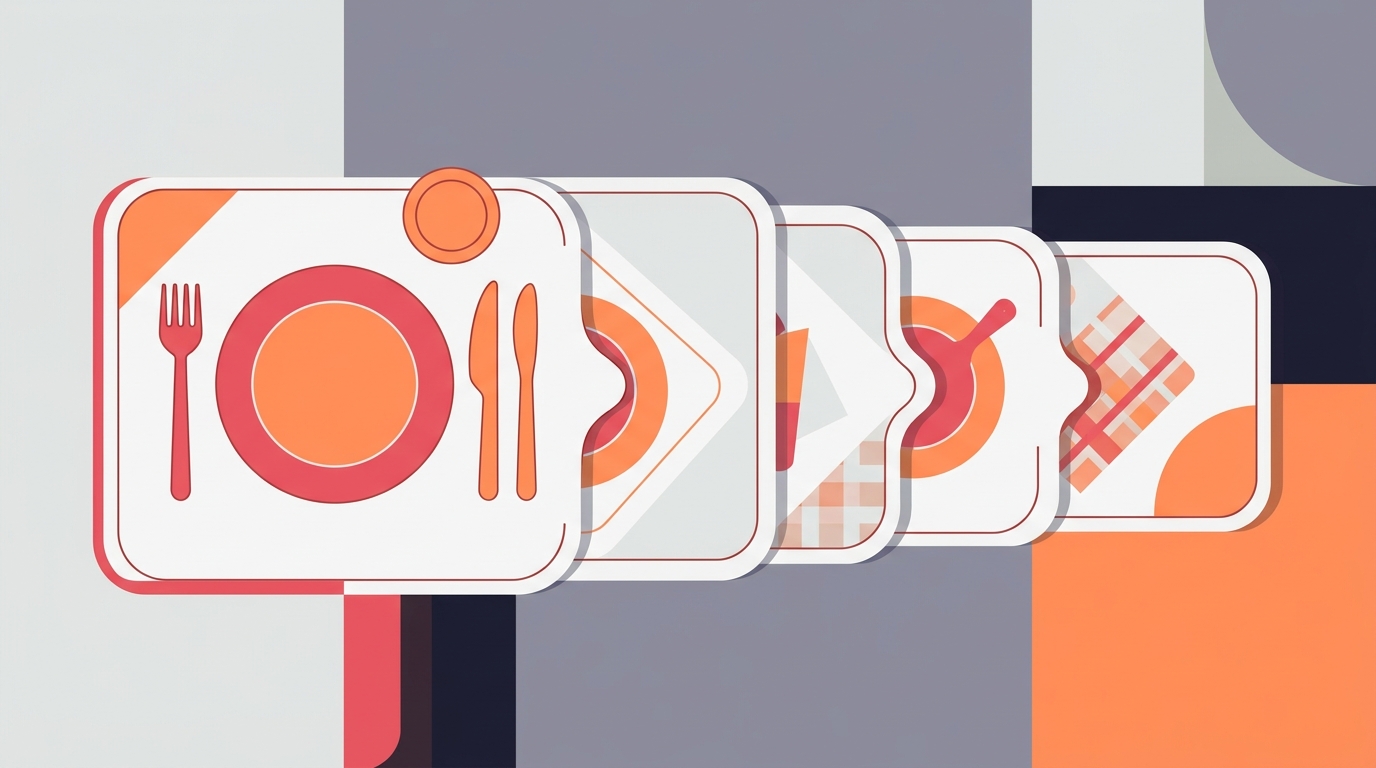
Carousels change that equation. They let you walk someone through a tasting menu, tell the story behind a dish, showcase your space from entrance to dessert, or present a seasonal special with the context that makes it compelling. According to Hootsuite, Instagram carousels generate up to 10x more engagement than standard posts — and for restaurants, that engagement translates directly into bookings, walk-ins, and repeat visits.
The restaurant industry has been slow to adopt carousels beyond basic photo dumps. Most restaurant Instagram accounts post a single food photo with a lengthy caption. That works, but it’s leaving engagement on the table. Here are six carousel formats designed specifically for restaurants and cafes, with frameworks that turn your food content into a booking engine.
Why Carousels Work for Restaurants
Food is sequential. A meal unfolds in courses. A recipe builds in steps. A dining experience progresses from the first impression to the last bite. Carousels mirror this natural sequence.
Context creates cravings. A photo of pasta is nice. A carousel that shows the hand-rolled process, the sauce simmering, the fresh ingredients from the local market, and the final plated dish — that creates an experience the viewer can almost taste.
Saves equal future visits. When someone saves your carousel, they’re bookmarking your restaurant for a future visit. Instagram saves are essentially digital “I want to go here” pins. Carousels average a 0.55% engagement rate — significantly higher than single images — and restaurant carousels tend to over-index on saves because the content has practical value.
Local discovery. Instagram’s algorithm surfaces carousel content to users who engage with similar content in your area. A well-structured restaurant carousel can reach potential customers who’ve never heard of you.
6 Carousel Ideas for Restaurants
1. The “Signature Dish” Story (Storytelling Framework)
Format: 6-7 slides telling the origin story of your best dish Best for: Creating emotional connection and differentiating from competitors
Every restaurant has a dish with a story. Maybe it’s your grandmother’s recipe. Maybe it’s something your chef discovered traveling through Southeast Asia. Maybe it’s the result of six months of experimentation.
- Slide 1 (Hook): A stunning shot of the finished dish. “The dish that started it all.”
- Slide 2: The origin — where did this recipe come from? Personal family history, travel inspiration, or seasonal discovery.
- Slide 3: The key ingredient — what makes this version special? Show the ingredient in its raw form.
- Slide 4: The process — one photo or graphic showing a critical step. Hand-pulling the noodles, charring the peppers, aging the cheese.
- Slide 5: The philosophy — “We believe food should [your restaurant’s value]. This dish embodies that because…”
- Slide 6: The plated result from a different angle than slide 1
- Slide 7 (CTA): “Reserve a table and taste it yourself. Link in bio.”
Storytelling carousels work because they transform a commodity (food photo) into an experience. Anyone can post a pasta picture. Only your restaurant can tell this specific story.
2. The Seasonal Menu Showcase (AIDA Framework)
Format: 7-8 slides highlighting new seasonal offerings Best for: Driving visits during menu launches and seasonal transitions
- Slide 1 (Attention): “Our Spring Menu Just Dropped. Here’s What’s New.”
- Slide 2 (Interest): Hero shot of the standout new dish with a one-line description
- Slide 3: Second new dish — ingredients and inspiration
- Slide 4: New cocktail or beverage pairing
- Slide 5: New dessert — show the plating process
- Slide 6 (Desire): “Available for the next 8 weeks only. Once the season turns, these dishes go with it.”
- Slide 7: Shot of the dining space set for the season — new table settings, decor changes, lighting
- Slide 8 (Action): “Book your table before the season’s over. Reservations open — link in bio.”
The scarcity angle (seasonal availability) creates urgency. Combined with AIDA’s attention-to-action flow, this format drives reservations from people who don’t want to miss out.
3. The “Behind the Kitchen” Tour (Listicle Framework)
Format: 6-8 slides showing the preparation process Best for: Building trust and showcasing quality through transparency
Customers increasingly want to know what goes into their food. A behind-the-scenes carousel satisfies that curiosity while differentiating you from restaurants that rely solely on plated photos.
- Slide 1: “What Happens Before Your Plate Arrives (Kitchen Tour)”
- Slide 2: “6:00 AM — Fresh produce arrives. We source from [local farm/market] daily.”
- Slide 3: “8:00 AM — Stocks and sauces start. Our bone broth simmers for 12 hours.”
- Slide 4: “10:00 AM — Prep work. Every vegetable cut by hand, every pasta rolled fresh.”
- Slide 5: “4:00 PM — The dining room is set. Candles lit, glasses polished.”
- Slide 6: “6:00 PM — First tickets fire. This is where the magic happens.”
- Slide 7: The finished plate — full circle from raw ingredients to table
- Slide 8 (CTA): “Come see (and taste) the difference. Reserve your table tonight.”
This format works because it demonstrates effort and care. Every slide reinforces the quality proposition — “we take this seriously.”
4. The “Myth vs Fact” Food Education (Myth vs Fact Framework)
Format: 5-6 slides debunking common food myths Best for: Reaching new audiences beyond your existing followers
Myth-busting carousels perform well algorithmically because they generate comments and shares. For restaurants, they demonstrate culinary expertise while creating shareable content.
- Slide 1: “5 Food Myths Your Chef Wants You to Stop Believing”
- Slide 2: Myth: “Searing meat seals in the juices” / Fact: “Searing creates flavor through the Maillard reaction. The juices come from proper resting after cooking.”
- Slide 3: Myth: “Fresh pasta is always better than dried” / Fact: “Different sauces work better with different pasta types. Some of Italy’s most celebrated dishes use dried pasta.”
- Slide 4: Myth: “Expensive olive oil should be used for everything” / Fact: “Extra virgin olive oil loses its nuance at high heat. Save it for finishing and dressings. Use regular olive oil or a neutral oil for cooking.”
- Slide 5: Myth: “MSG is bad for you” / Fact: “MSG is a naturally occurring amino acid found in tomatoes, parmesan, and mushrooms. Decades of research have found no basis for health concerns at normal dietary levels.”
- Slide 6 (CTA): “Which one surprised you? Comment below. And come taste the difference when a chef who knows the facts cooks your dinner.”
5. The “This or That” Pairing Guide (This or That Framework)
Format: 5-7 slides comparing food and drink pairings Best for: Engagement through opinion-based content and showcasing menu depth
- Slide 1: “Wine Pairing Challenge: Can You Pick the Right Match?”
- Slide 2: “Grilled Salmon: Pinot Noir or Chardonnay?” (Answer on next slide: Chardonnay — the buttery notes complement the richness of the fish)
- Slide 3: “Margherita Pizza: Chianti or Prosecco?” (Answer: Both work. Chianti for a classic pairing, Prosecco for a lighter, celebratory feel.)
- Slide 4: “Dark Chocolate Dessert: Cabernet or Port?” (Answer: Port — the sweetness matches the intensity of the chocolate.)
- Slide 5: “Spicy Thai Curry: IPA or Riesling?” (Answer: Riesling — the sweetness and acidity cut through the heat. IPA amplifies it.)
- Slide 6: Your score interpretation — “4/4: You should be our sommelier. 2-3: Solid instincts. 0-1: Come in and let us guide you through a pairing dinner.”
- Slide 7 (CTA): “Book our wine pairing dinner — next available date in bio.”
Interactive carousels like this drive comments because people want to share their answers. Every comment boosts your reach.
6. The “Regular’s Guide” to Ordering (PAS Framework)
Format: 6-7 slides helping first-time visitors navigate the menu Best for: Converting followers who haven’t visited yet into first-time guests
- Slide 1 (Problem): “Coming to [Restaurant Name] for the first time? The menu can be overwhelming.”
- Slide 2: “We get it — 40 items, half of them in Italian, and no idea where to start.”
- Slide 3 (Agitate): “Most first-timers play it safe and order the thing they recognize. They miss the dishes that regulars know are the real stars.”
- Slide 4 (Solution): “Here’s what the regulars order:”
- Slide 5: “Starter: [dish name] — It doesn’t look like much on the menu but it’s the dish that creates regulars.”
- Slide 6: “Main: [dish name] — Our chef’s pride. Ask for it [specific preparation tip].”
- Slide 7 (CTA): “Now you know the secrets. Book your first visit — link in bio.”
This format works because it removes friction. The fear of ordering wrong (or missing the best dishes) keeps some people from visiting. A “regular’s guide” eliminates that barrier.
Palette and Style Recommendations
Restaurant carousels need to evoke appetite and atmosphere. The wrong palette can make food look unappetizing.
- Fine dining: Midnight palette (deep navy, sophisticated) with Playfair Display for elegant serif headlines — conveys exclusivity
- Casual/family dining: Warm palette (earthy, inviting) with Nunito for friendly, approachable text — conveys comfort
- Cafe/brunch spots: Sage palette (fresh greens, natural) with Poppins for modern, clean text — conveys freshness
- Bold/modern concepts: Coral palette (vibrant, energetic) with Montserrat for clean contemporary slides — conveys creativity
- Italian/Mediterranean: Sunset palette (warm golds and terracotta) with Lora for classic warmth — conveys tradition
Photography tips for food carousels: Shoot in natural light when possible. Warm tones (slightly boosted oranges and yellows) make food look more appetizing than cool tones. Overhead shots work well for carousels because they fit the square-to-portrait aspect ratio better than angled shots.
Turning Engagement Into Bookings
Restaurant carousels have a shorter conversion path than most industries. Someone sees your carousel, gets hungry, and books a table — sometimes within the hour. Make that path frictionless:
- Include reservation links in every carousel’s CTA slide and caption
- Respond to comments within an hour (especially “where is this?” and “is this available tonight?”)
- Use carousel saves as a remarketing signal — people who saved your content are warm leads for seasonal promotions
Tools like Carousel help restaurants produce professional-looking carousel posts quickly — select a framework like AIDA or Storytelling, add your food photos and descriptions, choose a palette like Warm or Sunset, and export a polished slide deck ready for Instagram. It’s particularly useful for restaurants that don’t have a dedicated social media manager.
Key Takeaways
- Restaurant carousels should tell stories, not just showcase photos — context creates cravings
- Seasonal menu showcases with scarcity angles drive reservations
- Behind-the-kitchen content builds trust through transparency
- Interactive formats (This or That, Myth vs Fact) generate comments that boost algorithmic reach
- Use warm, appetite-stimulating palettes (Warm, Sunset, Coral) — cool tones make food look less appealing
- Every carousel needs a clear booking CTA — the path from craving to reservation should be frictionless
Ready to create restaurant carousels that fill tables? Download Carousel — free on the App Store.