
Myth vs Fact Carousels: The Engagement Format That Keeps People Swiping
Every niche has myths that refuse to die. Fitness has “no pain, no gain.” Marketing has “post every day or the algorithm buries you.” Real estate has “you always need 20% down.”
These myths persist because they sound true. And that tension between what people believe and what is actually correct is one of the most powerful engagement tools available on social media.
The myth vs fact carousel taps directly into that tension. It stops the scroll with a provocative claim, creates an open loop the reader needs to close, and positions you as the trusted authority who separates signal from noise.
Why the Myth vs Fact Format Works
The format works because it leverages three psychological principles simultaneously.
Curiosity gap. When you present a statement labeled “myth,” the reader’s brain immediately asks “wait, is that wrong?” That question creates a gap they need to close by swiping to the next slide.
Pattern interrupt. Most carousel posts follow predictable structures: lists, how-tos, step-by-step guides. A bold claim labeled “myth” breaks the expected pattern and forces attention.
Authority positioning. When you debunk a common misconception, you implicitly demonstrate expertise. The reader walks away thinking “this person knows what they are talking about” without you ever having to say it directly.
This combination makes myth vs fact carousels among the most saved and shared formats on Instagram and LinkedIn. People save them because they learned something surprising, and share them because correcting misconceptions feels socially valuable.
How to Structure a Myth vs Fact Carousel
The format is flexible, but the highest-performing myth vs fact carousels follow a consistent slide structure.
Slide 1: The Hook
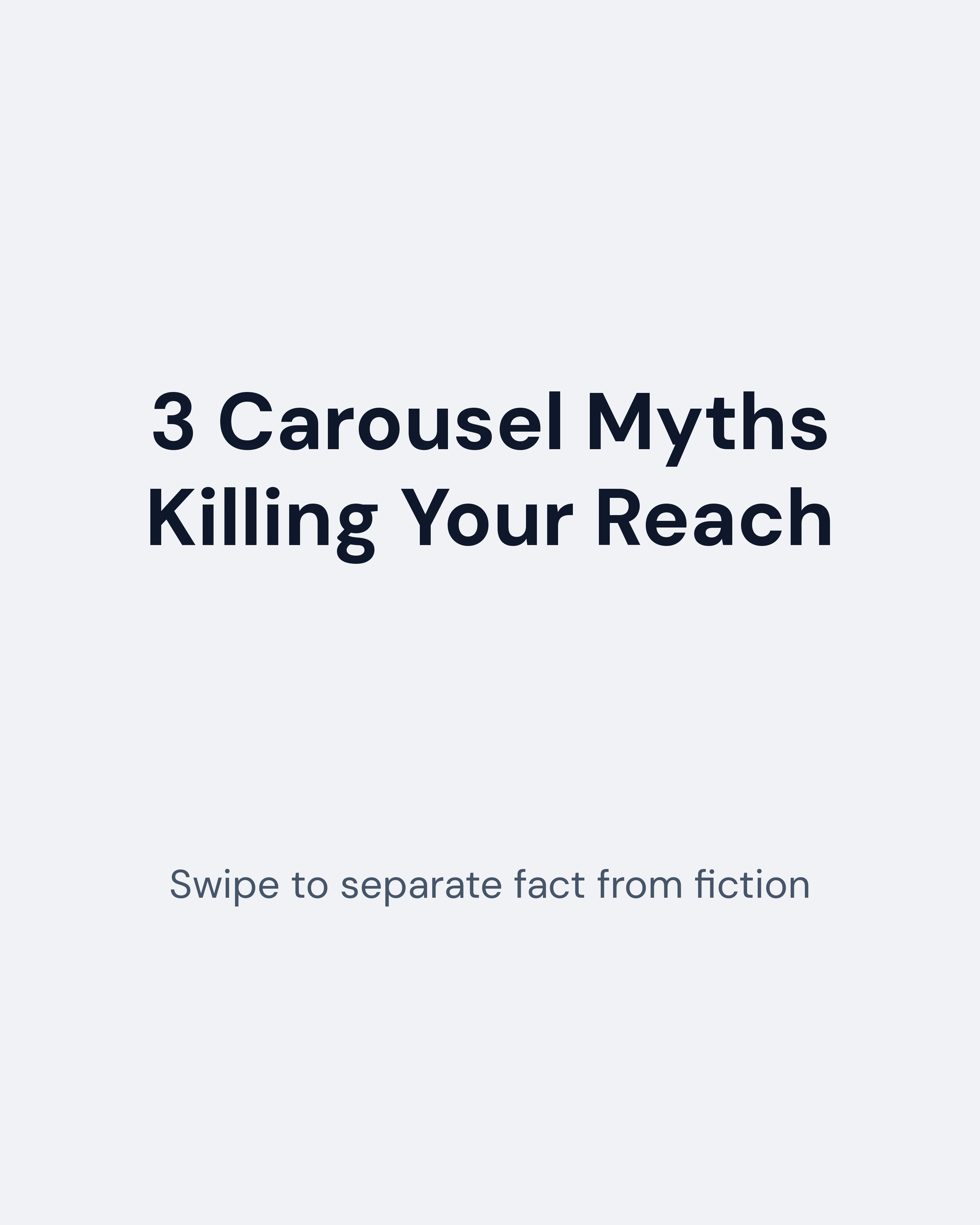
Open with a statement bold enough to stop the scroll. Frame it around the number of myths you will debunk or lead with the most provocative one.
- “3 Carousel Myths That Are Killing Your Engagement”
- “Everything You Learned About Hashtags Is Wrong”
- “The Biggest Lie in Personal Finance”
The hook slide should create an open loop. The reader needs to swipe to find out which beliefs are wrong and why.
Slides 2-3: Myth Then Fact (Paired)
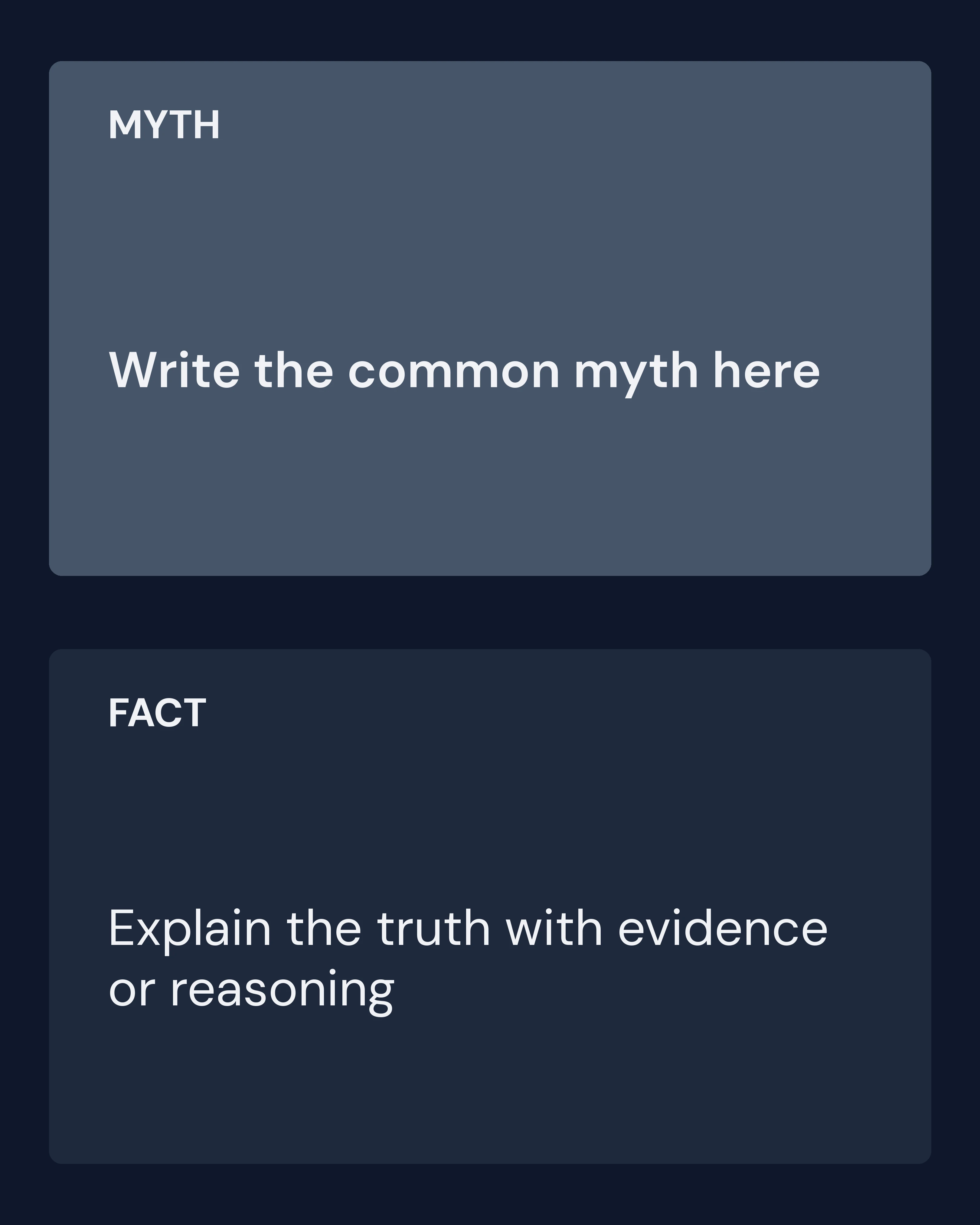
Each myth-fact pair should occupy its own slide or pair of slides. Present the myth first, then immediately follow with the corrected fact.
- Myth slide: State the misconception clearly. Do not soften it. The more confidently you present the myth, the more satisfying the correction feels.
- Fact slide: Provide the correction with a brief, concrete explanation. Avoid vague reassurances. Specificity builds trust.

Slides 4-7: Repeat the Pattern
Continue alternating myth and fact slides. Most high-performing carousels include 3-5 myth-fact pairs, which translates to 7-11 total slides including the hook and closing.
Final Slide: The CTA
Close with a call to action that reinforces your authority. Common approaches:
- Ask the audience which myth surprised them most (drives comments)
- Invite them to save the post for reference (drives saves)
- Point them to a related resource or service
Mapping Myth vs Fact to Copywriting Frameworks
The myth vs fact format is not just a standalone idea. It maps naturally onto established copywriting frameworks, which means you can layer persuasion techniques into the structure.
AIDA (Attention, Interest, Desire, Action)
The hook slide grabs attention. The first myth-fact pair builds interest. Subsequent pairs deepen desire by showing the breadth of your expertise. The CTA slide drives action. This mapping works especially well for educational content where you want the reader to take a specific next step. For a deeper breakdown, see the full AIDA framework guide.
PAS (Problem, Agitation, Solution)
The myth itself is the problem. The explanation of why people believe it (and the consequences of that belief) is the agitation. The fact is the solution. This works particularly well when each myth has real-world consequences you can highlight. The PAS framework article covers this approach in detail.
Before-After-Bridge
The myth represents the “before” state of understanding. The fact is the “after.” Your expertise is the bridge. This mapping shines when myths have kept your audience stuck and you want to position a transformation. You can find more on this approach in the Before-After-Bridge guide.
Common Mistakes to Avoid
Weak myths. If the myth is something nobody actually believes, the format falls flat. Choose misconceptions that your audience genuinely holds or encounters regularly.
Vague facts. “Actually, it depends” is not a compelling correction. Be specific. Use numbers, timeframes, or concrete examples.
Too many pairs. Five myth-fact pairs is usually the maximum before attention fades. Three to four is the sweet spot for most niches.
Condescending tone. There is a fine line between educating and lecturing. Present corrections with generosity, not superiority. The goal is to make the reader feel smarter, not foolish for believing the myth.
Adapting the Format for Different Platforms
The myth vs fact structure works across platforms, but the execution should shift slightly.
Instagram: Visual contrast matters. Use bold color shifts between myth and fact slides. The Slate palette works well because the neutral tones keep the focus on the content while the contrast between slides creates visual rhythm. Aim for 7-10 total slides.
LinkedIn: The format translates well to document carousels. LinkedIn audiences respond to industry-specific myth-busting, particularly around hiring, leadership, and business strategy. Keep slides text-heavier since LinkedIn users expect more depth per slide.
TikTok Photo Mode: The swipeable photo carousel format on TikTok is ideal for myth vs fact. Keep each slide to one statement with large, readable typography. The shorter attention span on TikTok means 5-7 slides is the sweet spot.
Where Myth vs Fact Carousels Work Best
The format performs well across nearly every niche, but certain industries see outsized results:
- Health and wellness: Diet myths, exercise misconceptions, supplement claims
- Finance: Investment myths, tax misconceptions, budgeting beliefs
- Marketing: Algorithm myths, engagement misconceptions, growth hacking claims
- Education: Study myths, learning style misconceptions, productivity beliefs
- Real estate: Buying process myths, mortgage misconceptions, market timing beliefs
- Fitness: Training myths, nutrition misconceptions, recovery claims
Any field where conventional wisdom exists alongside expert knowledge is fertile ground for myth-busting content.
How Carousel Makes This Easier
Building a myth vs fact carousel from scratch means designing paired slides, maintaining visual consistency across the alternating pattern, and making sure each slide stands on its own while working as part of a sequence.
With Carousel, you select the myth vs fact framework, input your myths and corrections, and the app generates slides with the alternating structure already built in. The paired slide design handles the visual rhythm automatically, so each myth-fact swap feels clean and intentional without manual layout work.
Key Takeaways
- The myth vs fact format leverages curiosity, pattern interruption, and authority positioning simultaneously.
- Structure slides in clear myth-fact pairs with a strong hook and a closing CTA.
- Map the format onto AIDA, PAS, or BAB frameworks for additional persuasive depth.
- Choose myths your audience genuinely believes, and correct them with specificity, not vague reassurance.
- Three to four myth-fact pairs per carousel hits the engagement sweet spot.