
Carousels Have a Second Life: How to Write Captions That Keep Working for Weeks
Carousels Have a Second Life: How to Write Captions That Keep Working for Weeks
Most carousels get judged in the first day. You post, you watch the likes for a few hours, decide whether it worked, and move on. The feed encourages that habit, because the feed only ever shows you what is new.
But the feed is not the only place a carousel gets found. People use Instagram’s search bar to look things up, Google can now show Instagram posts in its results, and your profile grid shows your old posts to every new visitor. A carousel that stopped moving in the feed on Tuesday can still be the post a stranger finds three weeks later.
When that happens, what gets matched against the search is not your design. It is the words: the caption and the alt text. That makes the caption the part of the post that earns the long tail.
This article extends our caption writing guide, which is about captions that earn comments in the first day and does not cover search. This one is about captions that keep working after that, and about the second half of the problem: how long to wait before deciding a carousel failed.
What Is Documented and What Is One Operator’s Rule
Documented. Since 10 July 2025, Instagram has let Google and other search engines show public content from professional accounts, meaning business and creator accounts held by people aged 18 or over. PPC Land’s report on the announcement says this covers photos, videos, carousels and Reels, describes captions and alt text as the text those engines can read, and notes a setting under Privacy that account holders can switch off. Personal and private accounts are not affected. Instagram’s own Help Center page on search engine indexing is the place to check the current criteria for your account.
On hashtags, Buffer’s guide to the Instagram algorithm notes that Instagram head Adam Mosseri has said hashtags do not help reach, that Instagram now caps posts at five, and recommends putting relevant keywords in captions and your profile instead. That recommendation is Buffer’s advice, not a Mosseri quotation, and we have not found Instagram saying outright that keywords outrank hashtags, so we do not claim it.
One operator’s rule. The specific claim that carousels keep resurfacing for weeks, and that this is something Reels basically never do, comes from one operator posting carousels at volume. His rule is to write Instagram captions longer and clearer than TikTok ones: lay out the context and the takeaway, use search language, and repeat the keyword at the end. We have not seen Instagram publish data on how long a carousel stays discoverable, so treat the “weeks” as an observation to test on your own account, not a guarantee.
What the documented part does establish is that your caption and alt text are the text a search engine can read. That is reason enough to write them as if someone will find them cold.
What a Searcher Needs From a Caption
Someone who finds your post through search did not follow you and has no idea who you are. They typed a question and landed on a carousel. So the caption has to do what a good page title and first paragraph do: say what the post is about, in the words the person used, before it does anything clever. Compare these two captions for the same carousel.
Before
Monstera tips from the shop. Swipe to see.
After
Why is my monstera turning yellow? It is almost always one of four things, and the first is the one most people skip.
We see this every week at the shop in Walthamstow. Someone brings in a monstera with yellowing leaves and assumes it needs more light or feed. Most of the time it is too much water.
Check in this order: how damp the soil is two knuckles deep, the roots, whether the pot drains, then sun scorch. One yellow lower leaf every month or two is normal, so do not panic over a single leaf.
The plant in these slides went from watering every four days to every ten. Six weeks later it was pushing out a new leaf. That is the short answer to why monstera leaves turn yellow: check the soil first.
Monstera yellow leaves, monstera care, overwatered monstera. Free plant clinic every Saturday, 10am to 4pm.
#monsteracare #houseplantcare #plantshop
The first caption works as a caption. It is short, friendly and invites a swipe. It also gives a search engine nothing to match: no plant problem, no symptom, no cause. The second is about 150 words and every sentence is either context or an answer.
Five Moves That Write for the Second Life
1. Give it real context
“Monstera tips” could be anything. “We see this every week at the shop in Walthamstow” says who is speaking, where, and how often, which is what a reader uses to decide whether to trust the answer. Name the place, the plant, the condition, the client type.
2. Spell out the takeaway in one sentence a searcher would type
Slides can hint. A caption should state. In the first few lines, write the plain answer to the question the post is about, phrased the way a person would type it: “Why is my monstera turning yellow?” followed by “Check the soil first.” If the answer lives only on the slides, the text search can read never contains it.
3. Use the language people actually search
You know the trade term. The searcher usually does not. A physio writes “lumbar extension”; the person at a desk types “why does sitting hurt my back”. A florist writes “conditioning stems”; the customer types “how to make cut flowers last longer”. Write the problem the way the customer states it, and put your expert term in as the second mention. If you are not sure what people type, start typing your topic into Instagram’s search bar and see what it suggests; the suggestions are phrased by searchers, not by professionals.
4. Reinforce the keyword at the end
Say the core phrase near the top, and say it again in the closing lines, as in the “why monstera leaves turn yellow” sentence above. This is the operator’s rule and it costs nothing. Keep it natural: a caption that repeats the keyword six times reads like spam to the person who matters most, the one reading it.
5. Write the alt text
Alt text is the description attached to each image, written for people using screen readers. It is also text that search can read, according to the coverage above. Instagram has a “write alt text” option under the advanced settings when you post, and it is the one place you can describe a slide in plain words without cluttering the caption.
Describe what is actually in the image in one sentence, naming the subject the way a searcher would. “A finger pushed two knuckles deep into damp monstera soil” is useful. “Slide 2” is not, and a string of keywords is worse than nothing.
Hashtags still have a small job. Instagram caps them at five, so use three to five that describe the post, at the end. They are labels, not a growth tactic.
A Worked Example: The Plant Shop Post
Here is the carousel that caption belongs to, written as a plant shop would post it for its customers. It is shown complete at eight slides. The cover does the first job of a search-friendly post: it asks the same question as the caption’s first line, trimmed to fit the slide.
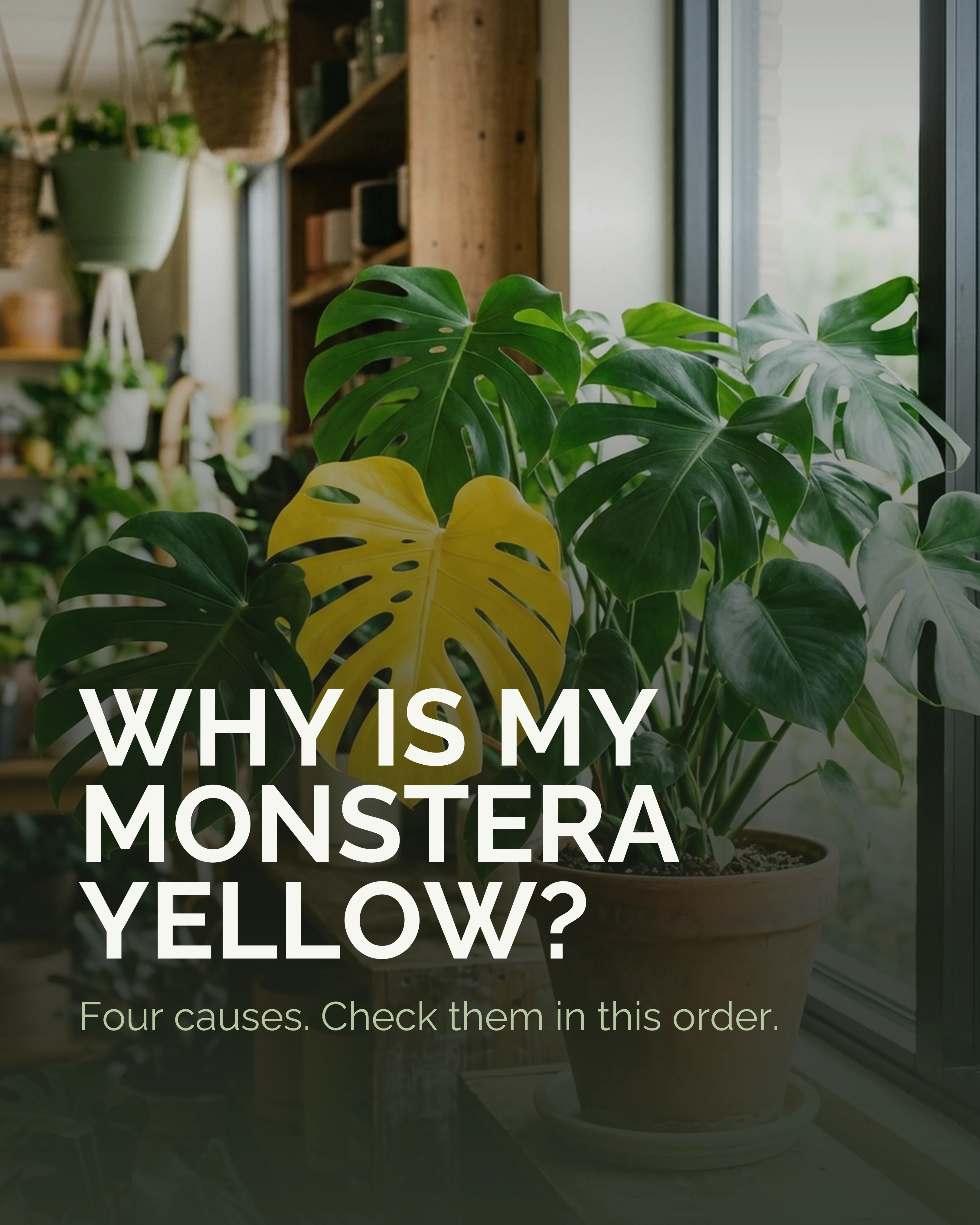
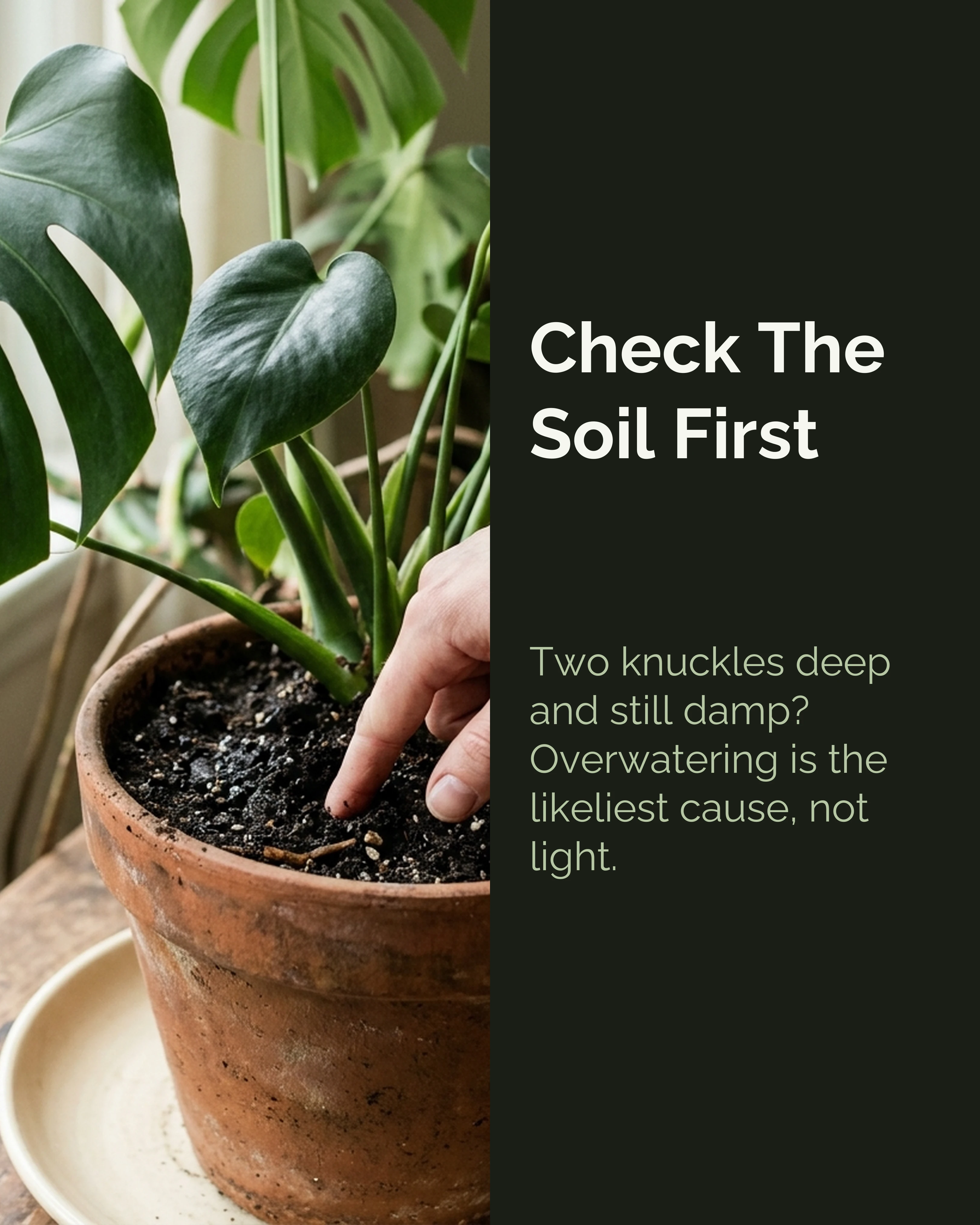
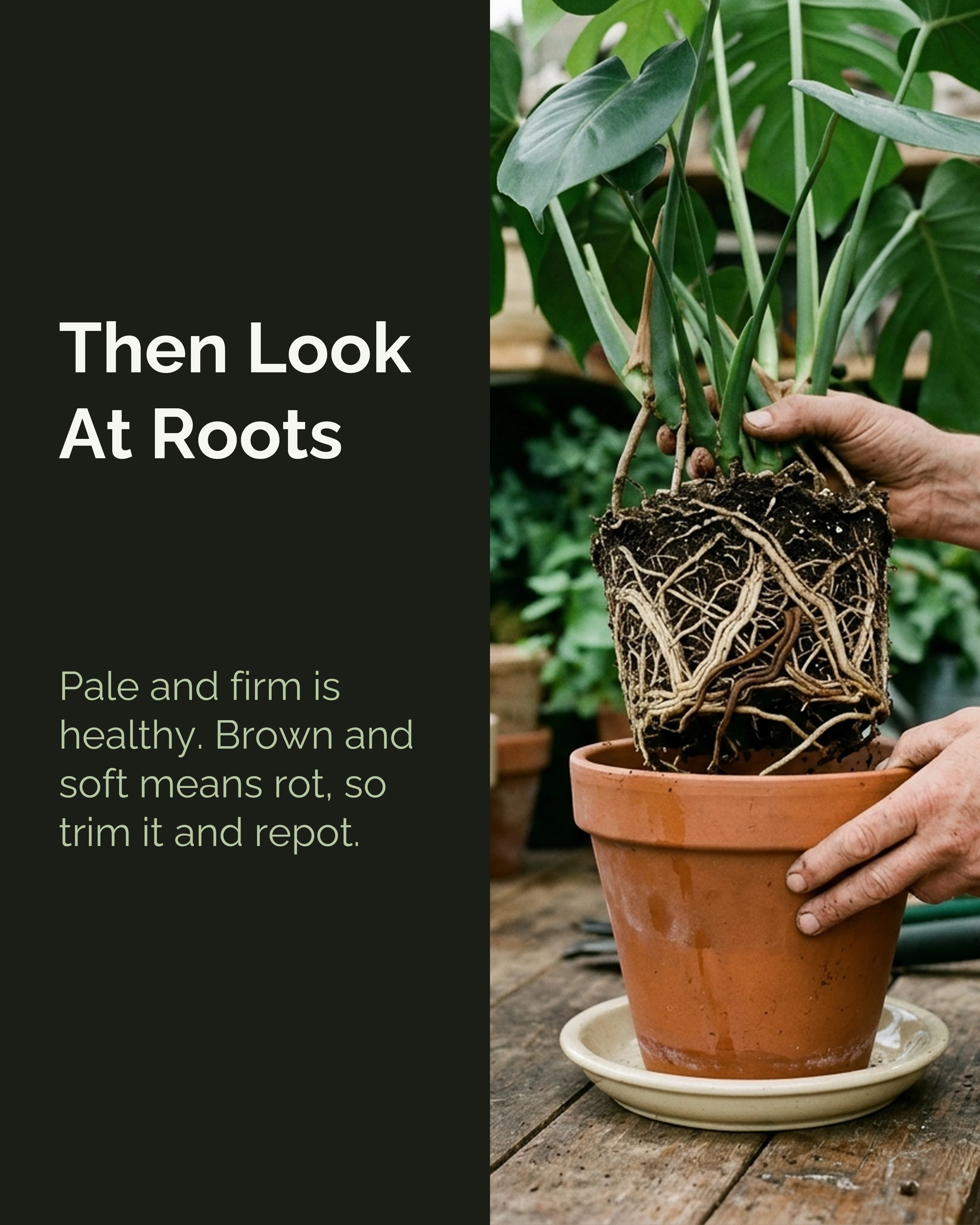
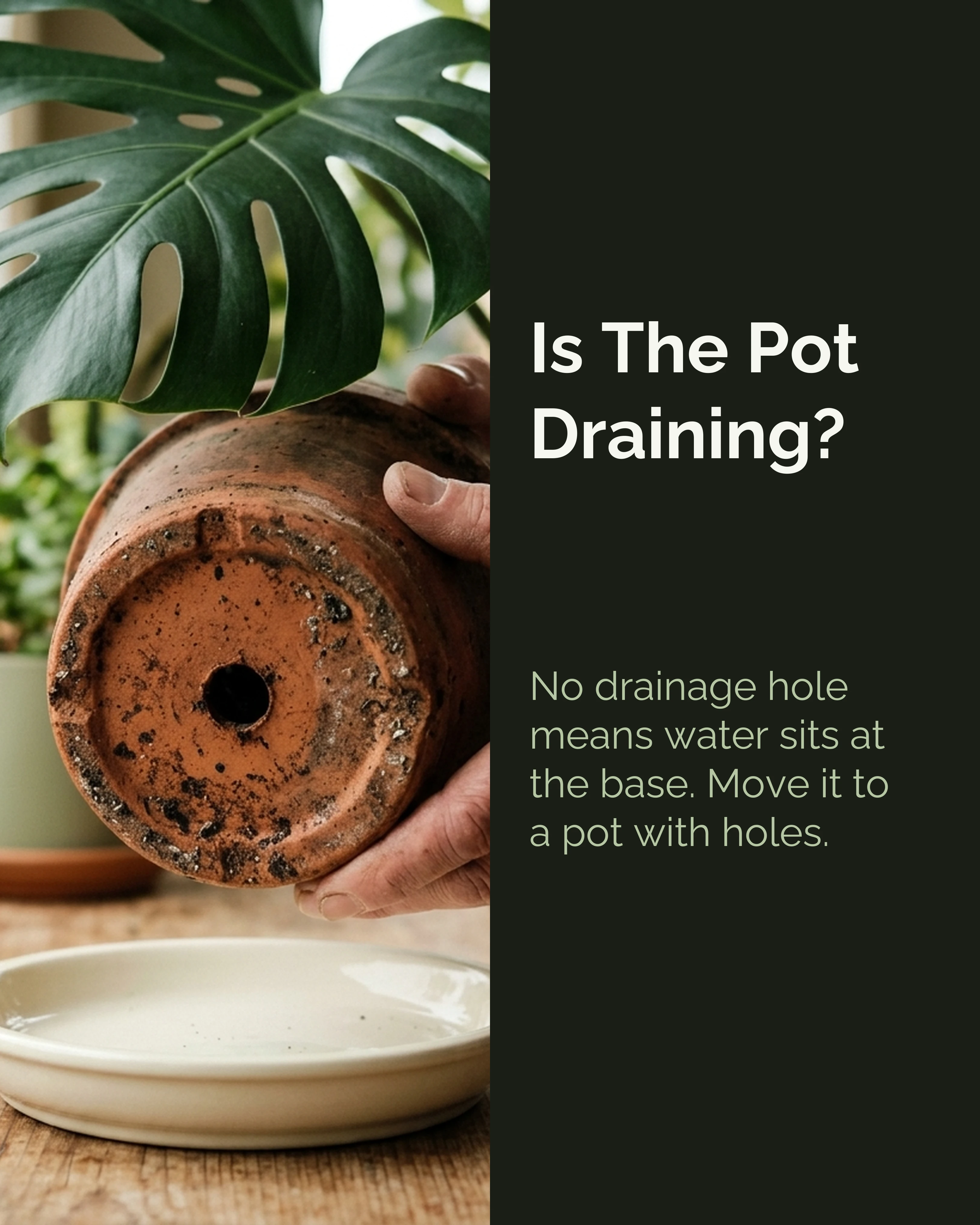
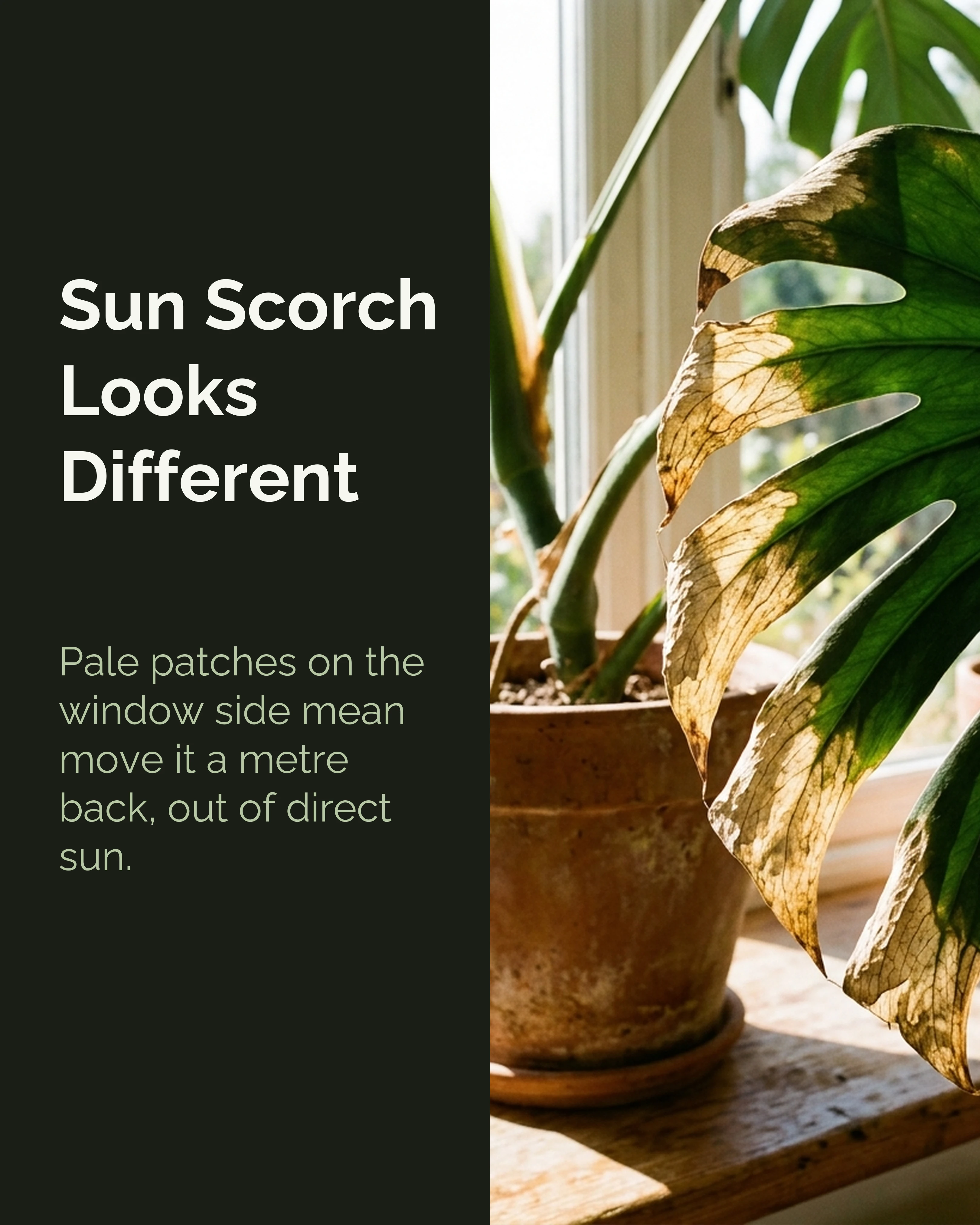
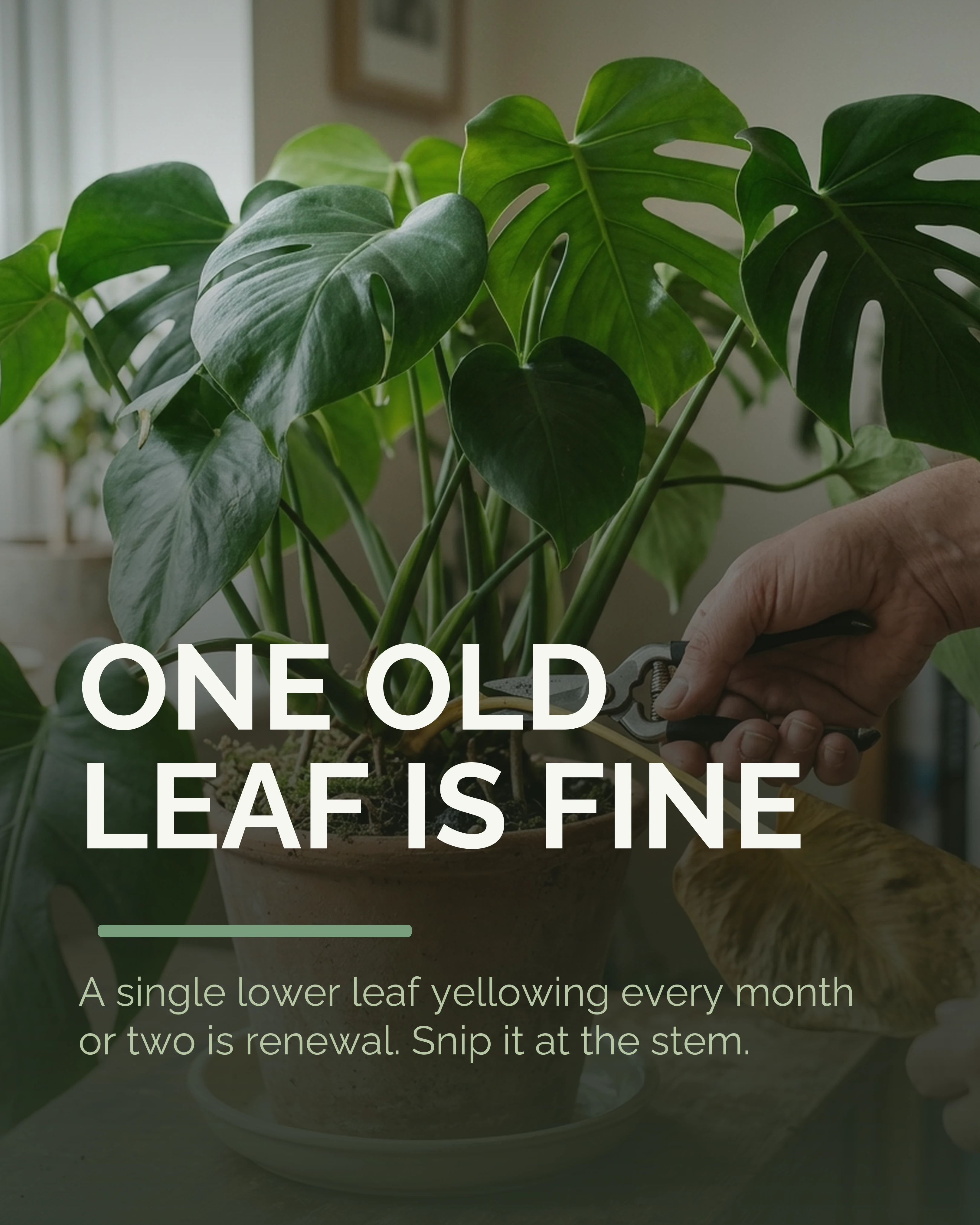
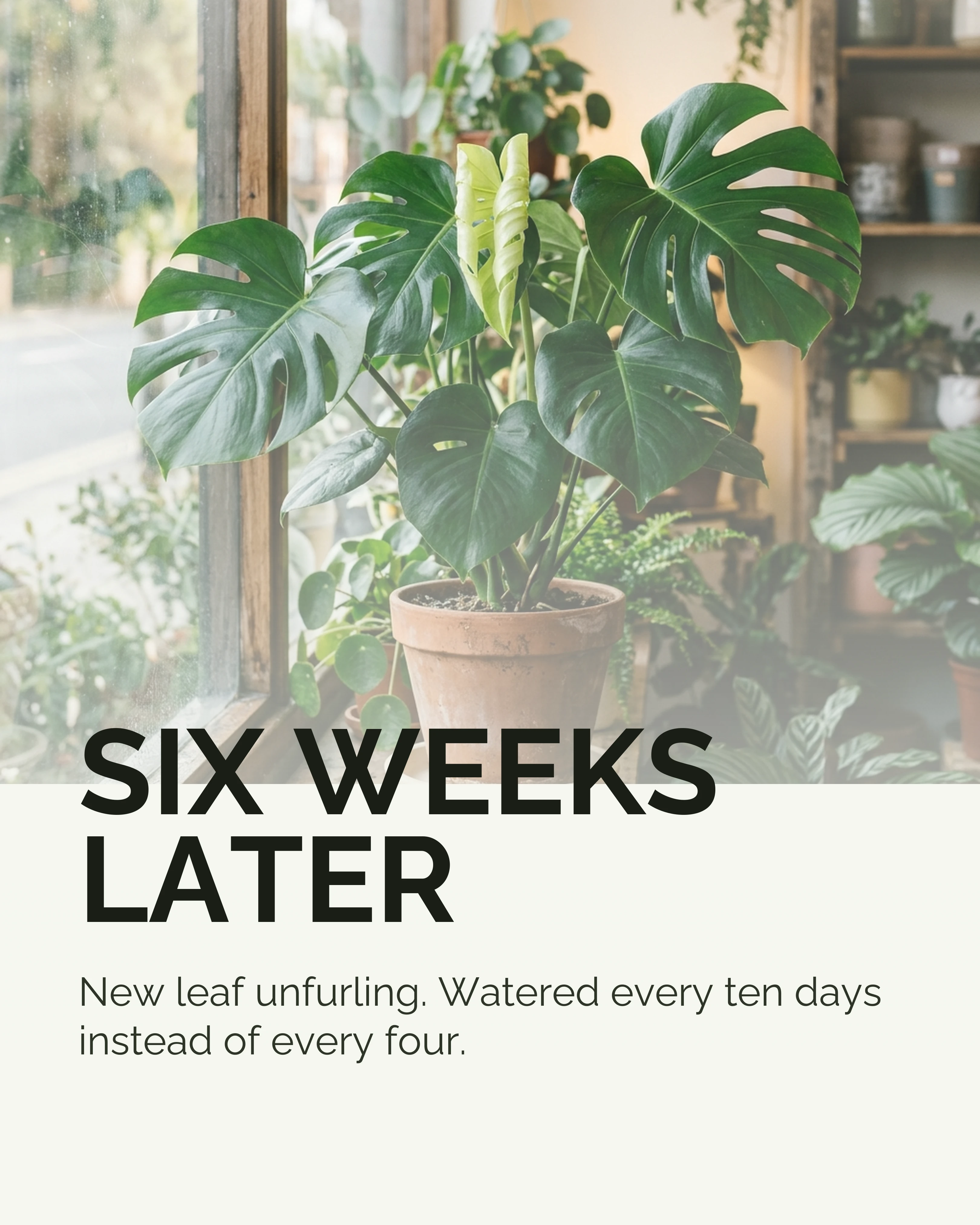

The post and the caption divide the work. The slides do the diagnosis, one cause per swipe, and the caption does not repeat them: it adds the context and the one-sentence answer. The cover echoes the keyword, so someone arriving from search sees the thing they typed, and it has to hold up as a tile on your profile grid, the other place a carousel keeps getting seen. The closing slide asks for one thing, and the caption repeats it in one line.
The plant shop carousel is the one shown complete in this article. The slide in the next section is representative, a single slide from a different post.
Slide 1 Should Echo the Keyword
The cover of a search-friendly carousel is both a scroll-stopper and a headline for the caption. Here is the same idea on a different subject, a physiotherapist’s post. The slide asks the question the way a person would type it, and the caption below uses the same phrase in its first line and again at the end.
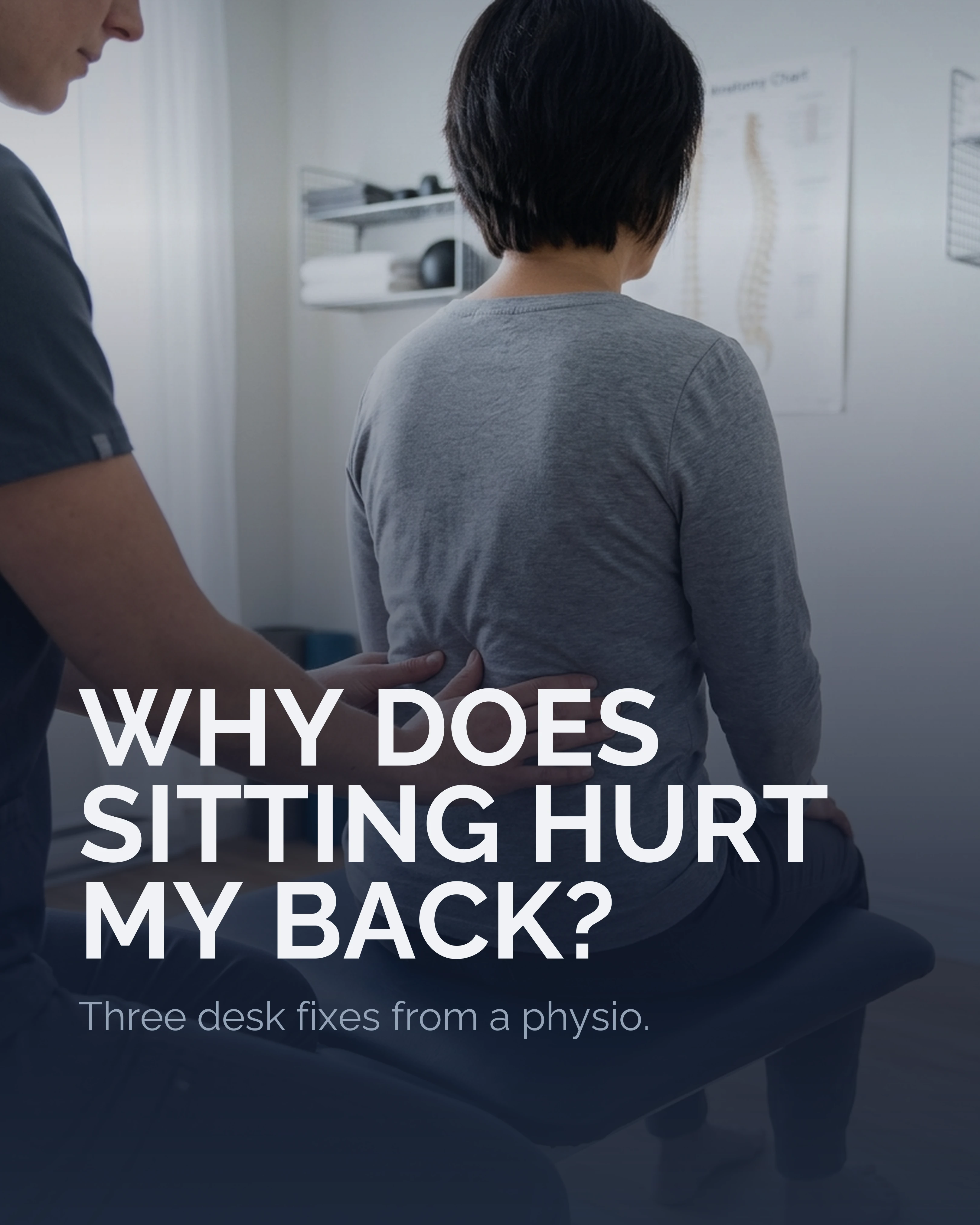
Caption for that post:
Why does sitting hurt my back? Most desk workers we see in the clinic have the same three habits, and all three are fixable in a week.
[Two or three short paragraphs of context: who you see, what you find, what you changed.]
That is the short answer to why sitting hurts your back by mid-afternoon: start with the first fix on slide 3 and give it five days.
The cover does not need the caption’s detail. It needs to carry the same phrase, so the post makes sense whichever door it was found through: the feed, the grid, or a search result. For more on making a cover work as a thumbnail and a hook, see our cover slide design guide.
This Cuts Against the Short Captions You See Everywhere
Plenty of accounts post a single line and a row of hashtags, and some of their carousels do well, so it is fair to ask whether this matters. A short caption is quick to read and can suit a self-explanatory post, and our caption guide says as much. But a caption of seven words gives a search engine seven words to work with. If your goal is comments from people who already follow you, short can be fine. If it includes being found by people who do not, the caption is the text that carries the answer.
There is no required length. The test is whether a stranger reading only the caption could tell what the post answers, who is answering, and why to trust them. If not, add context until they could.
When Is a Carousel Actually a Flop?
The operator whose rule we have been quoting reads TikTok and Instagram differently. On TikTok he reads saves and sends in the first six hours and calls the result by about eighteen. On Instagram the same reading misleads, because in his words, “a piece that looked flat at 18 hours can quietly accumulate saves”, and he says it is worth checking before you retire a topic. He describes strong saves and sends in the first six hours as a sign a carousel will keep distributing for days.
That is one operator’s rule, not a platform fact, but it corrects a common habit. If you kill a topic because the first day was quiet, you may be killing the posts that search and the grid would have carried.
Here is a way to apply it. The 6-hour and 18-hour checks come from that operator, the 72-hour one from our analytics guide, and the later check is our suggestion.
| When | What to read | What it can tell you |
|---|---|---|
| 6 hours | Saves and sends | An early sign of strong distribution. Not a verdict on its own. |
| 18 hours | Saves and sends again | Strong here is a good sign. Flat is not yet a failure on Instagram. |
| 72 hours | The five metrics in the analytics guide | The point at which we suggest you first record numbers. |
| 3 to 4 weeks | Saves, profile visits | Whether search and the grid have added to the total. |
And three rules to go with it:
- Do not retire a topic on one post, or one reading. Compare the same post at day 3 and again at week 4. If saves have moved, the post had a second life.
- Judge a topic on several posts. One quiet carousel can be a weak hook or a bad posting slot. Three quiet ones, each checked at the later window, is a pattern.
- When an old post is still collecting saves, improve its entry point. You can edit a published caption, and tightening the first line to match the search phrase costs a minute.
There is no published benchmark for how much a carousel should add after day three, so learn your own account’s pattern rather than chasing a number.
Where Carousel Fits
Captions get rushed because the slides took the evening. Carousel builds the slides from your outline in a few minutes, using frameworks like Listicle and Problem-Agitate-Solution, so a diagnosis post like the monstera one comes together quickly and the time you save can go into the caption and alt text, where the long tail is decided. The words in the caption are still yours to write; they are your shop, your clinic and your customers, and no template knows those.
Key Takeaways
- A carousel is found through search and the profile grid long after the feed has moved on, and the words that get matched are the caption and alt text.
- What is documented: since July 2025 Instagram has let search engines show public content from professional accounts. The claim that carousels keep resurfacing for weeks is one operator’s observation.
- Write for a stranger: real context, the answer in one searchable sentence, the customer’s own words, the keyword repeated at the end, and alt text on the slides that matter.
- Slide 1 should echo the same phrase as the caption, so the post makes sense whichever way it was found.
- On Instagram, do not call a carousel a flop at 18 hours. Check again at the later window before you retire a topic.
- Short captions are not wrong, but they give search very little. If being found by strangers is part of the goal, write the paragraph.