Car Detailing Carousel Posts: 7 Ideas That Justify the Price
Car Detailing Carousel Posts: 7 Ideas That Justify the Price
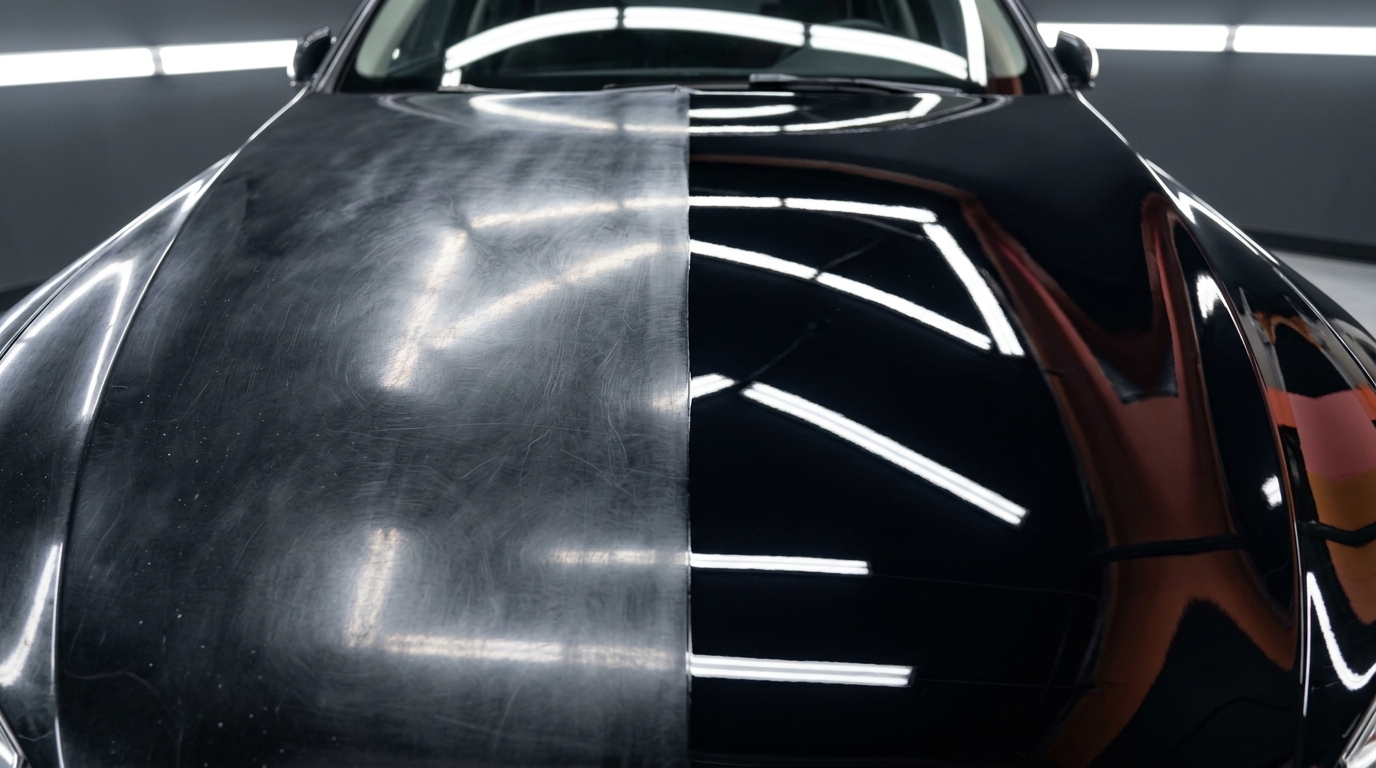
Detailing has a pricing problem that content can solve. A customer looks at a clean car and a very clean car and, from ten feet away in daylight, sees the same thing. The difference between a $150 wash and a $900 paint correction is entirely invisible unless someone shows it to them properly.
Most detailers try to solve this with a single after photo. It never works, because a shiny car in a photograph proves nothing. Shine is the default state of any car photographed under studio lighting.
Carousels solve it structurally. They give you the room to show the defect first, then the process, then the result — which is the only sequence that makes a number make sense.
This guide covers seven post ideas with example slides, plus the palettes and tone that make a detailing feed read as a professional operation rather than a hobbyist’s camera roll.
Why Carousels Work for Detailers
Three reasons, all specific to this trade.
Defects are invisible without context. Swirl marks only exist under a light. Contamination only exists on a clay bar. Holograms only exist at an angle. Every one of those needs a dedicated frame, and a carousel gives you nine of them.
The work happens over hours nobody sees. A correction is a full day. The customer drops the car off and collects it. Everything that justifies the invoice happened while they were at work.
The buying decision is comparative. People shopping for detailing are comparing you against a cheap mobile valeter and a dealership package. A post that shows the depth of the process is not marketing — it is the only available way to explain what they are actually choosing between.
The Before-After-Bridge framework is the natural fit here, with This or That covering the comparison posts.
Seven Carousel Ideas for Detailers
1. The Full Correction
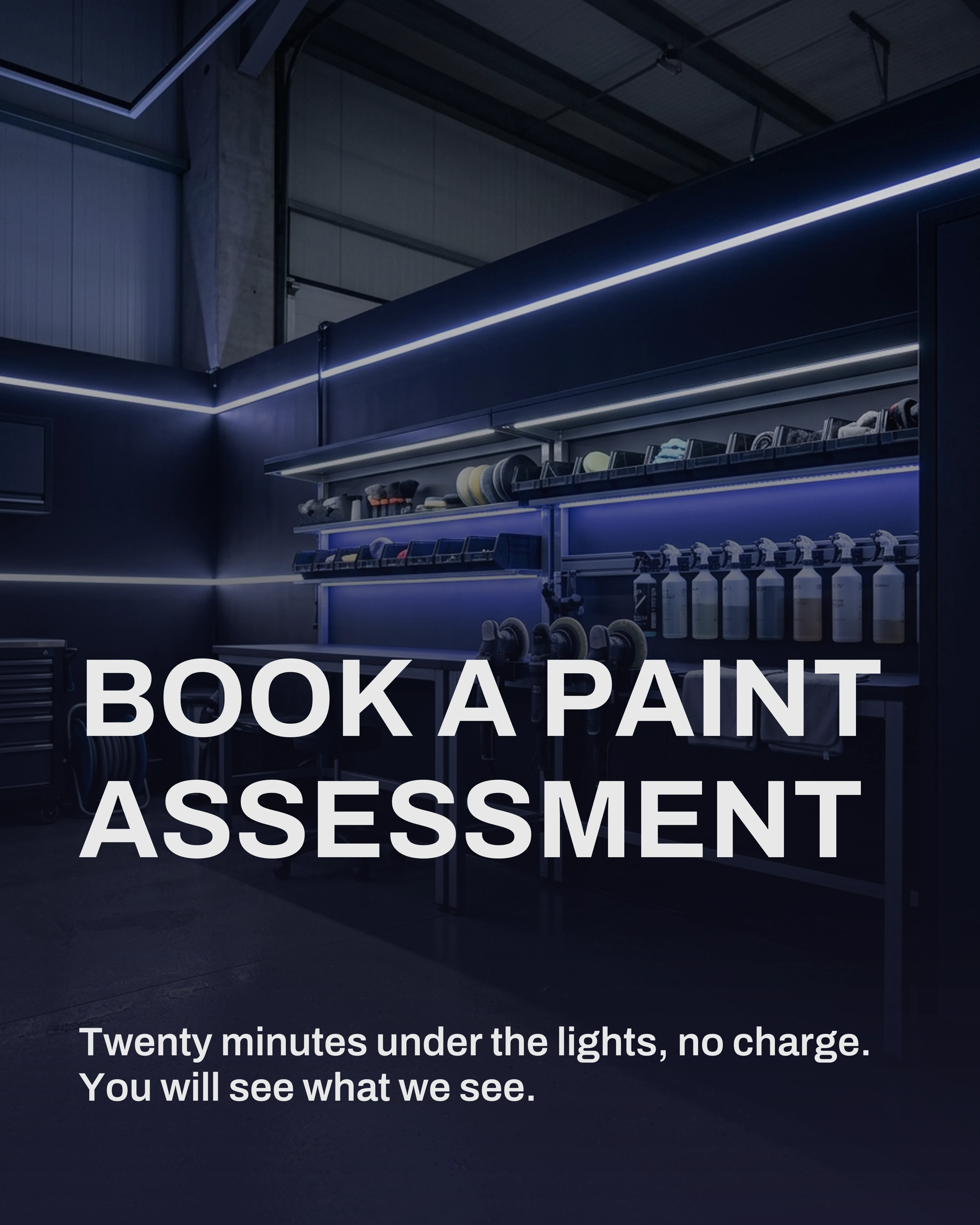
One car, start to finish. This is your flagship post and the one that generates enquiries months later, because it is the only content that makes a four-figure quote feel reasonable.
Shown below as a nine-slide post. The dull, swirled paint is the cover — the mess is the hook — and the mirror finish is what people swipe for. The middle is the part almost nobody publishes: foam, decontamination, taping, and the machine work that takes the actual day.
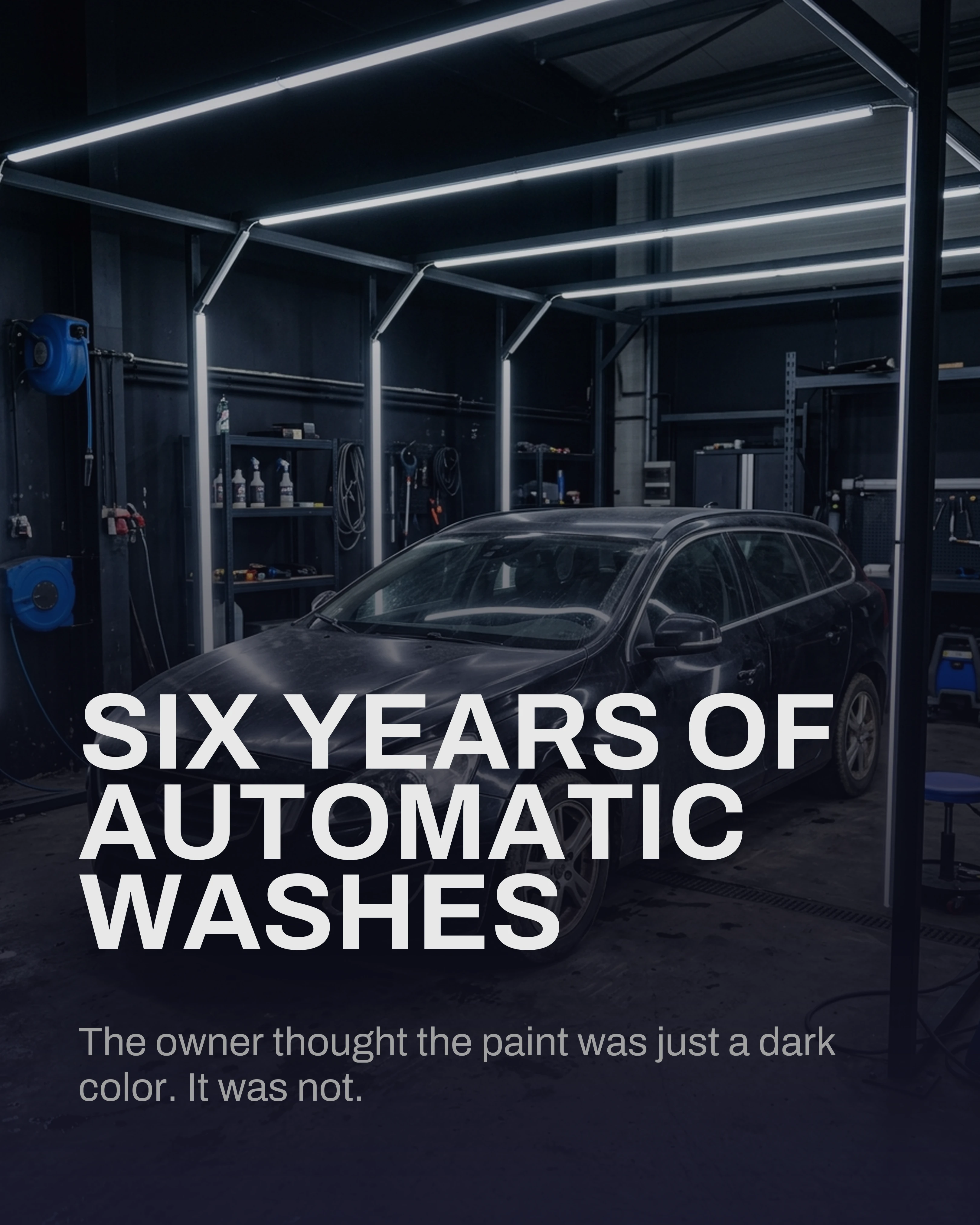
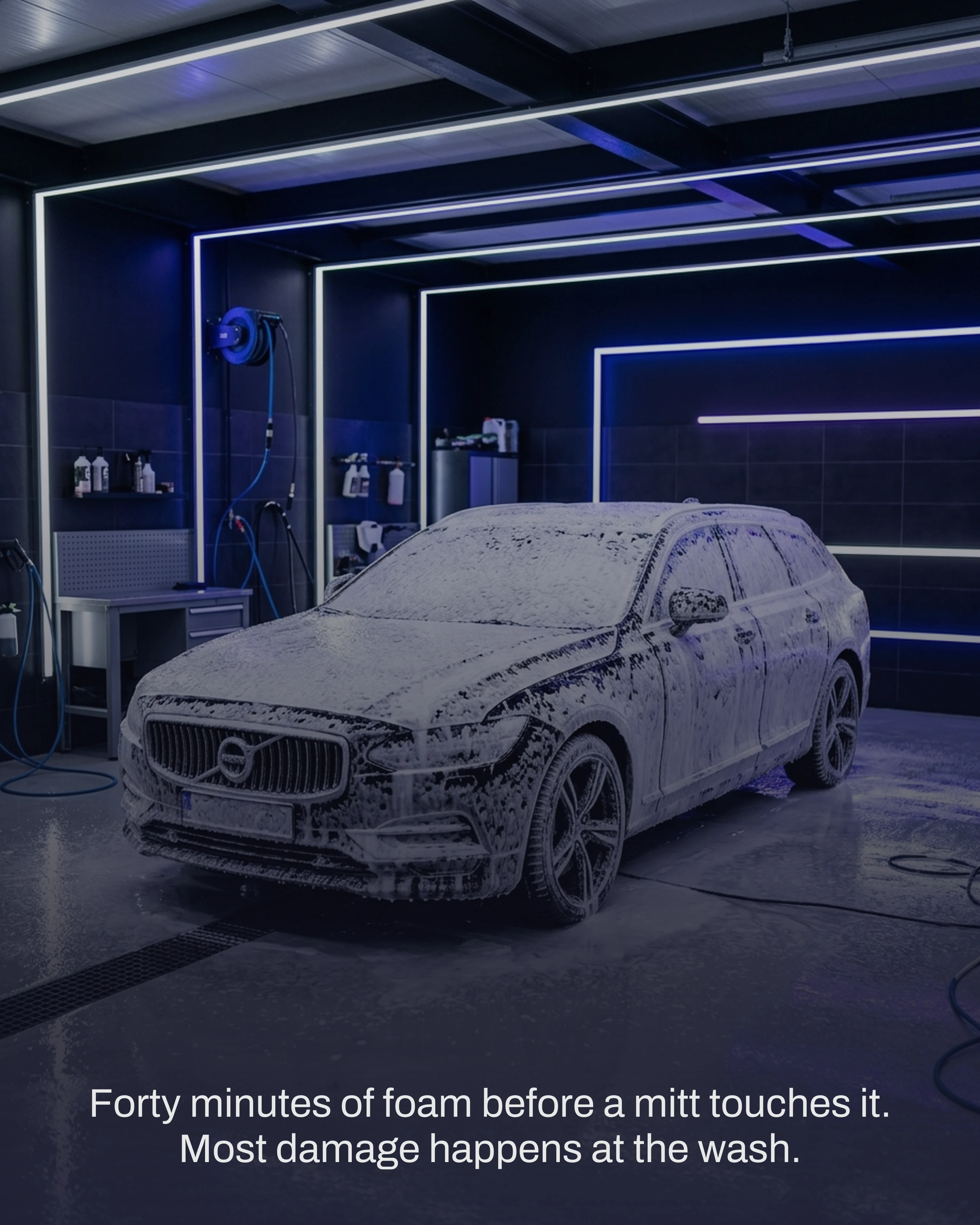
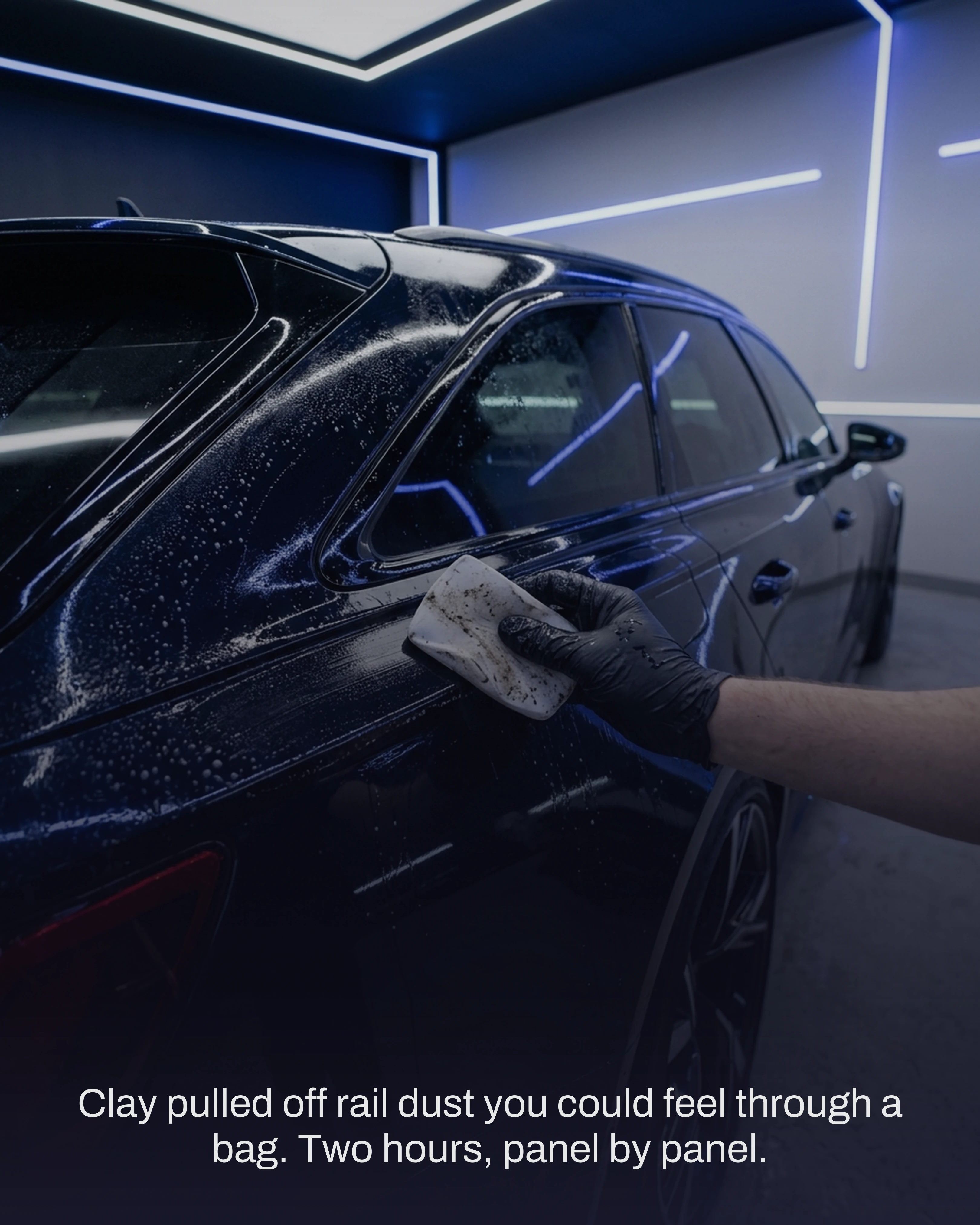
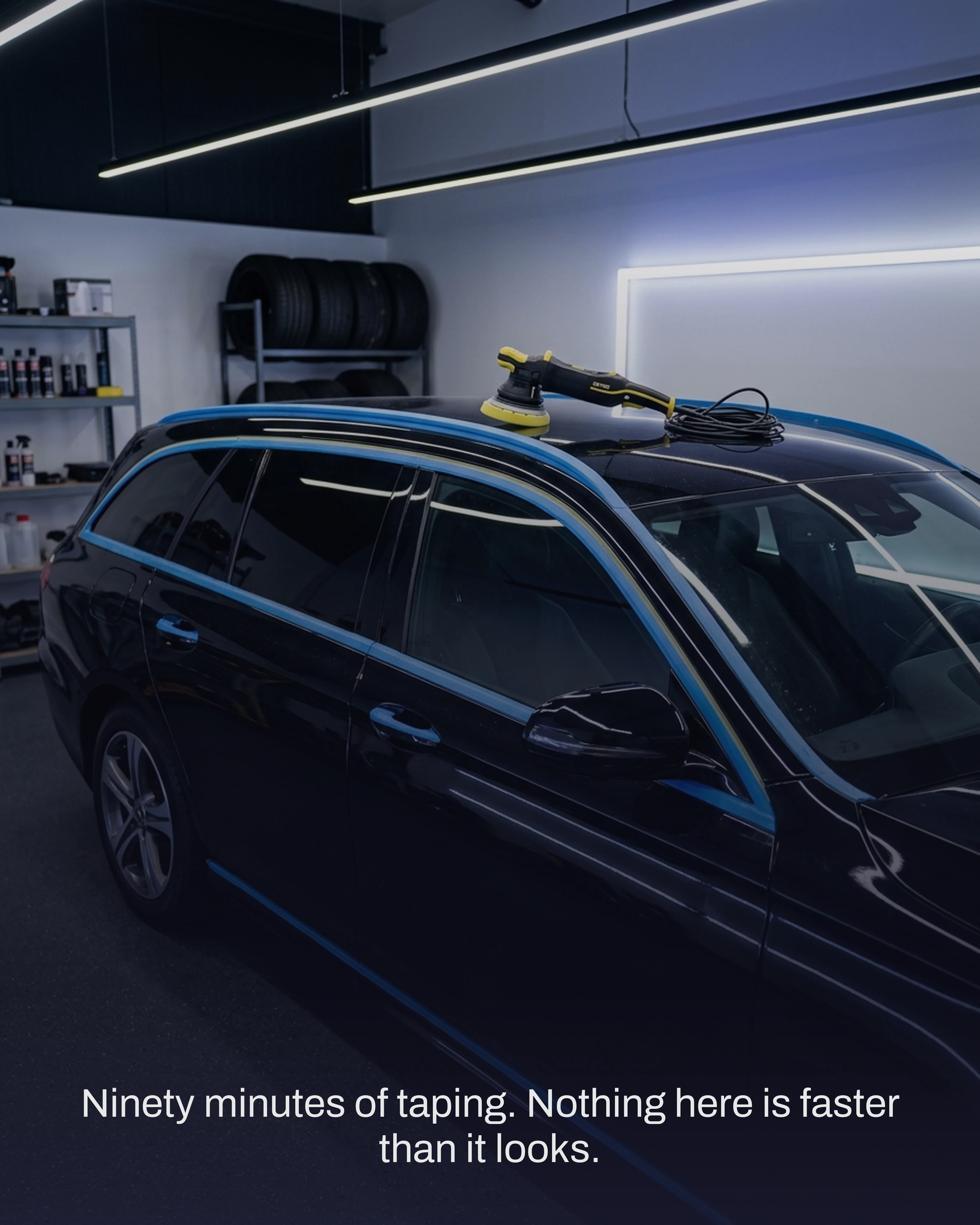
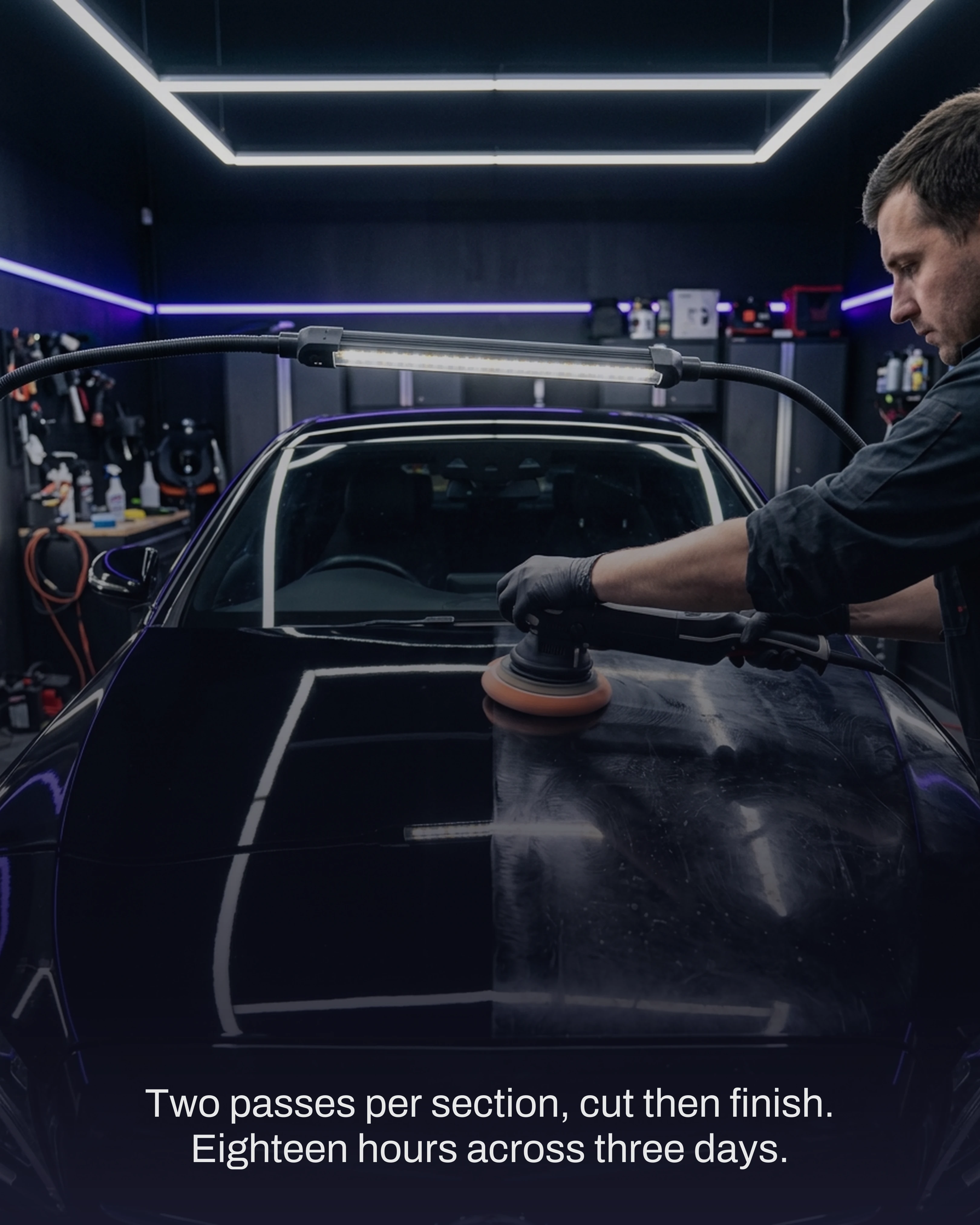

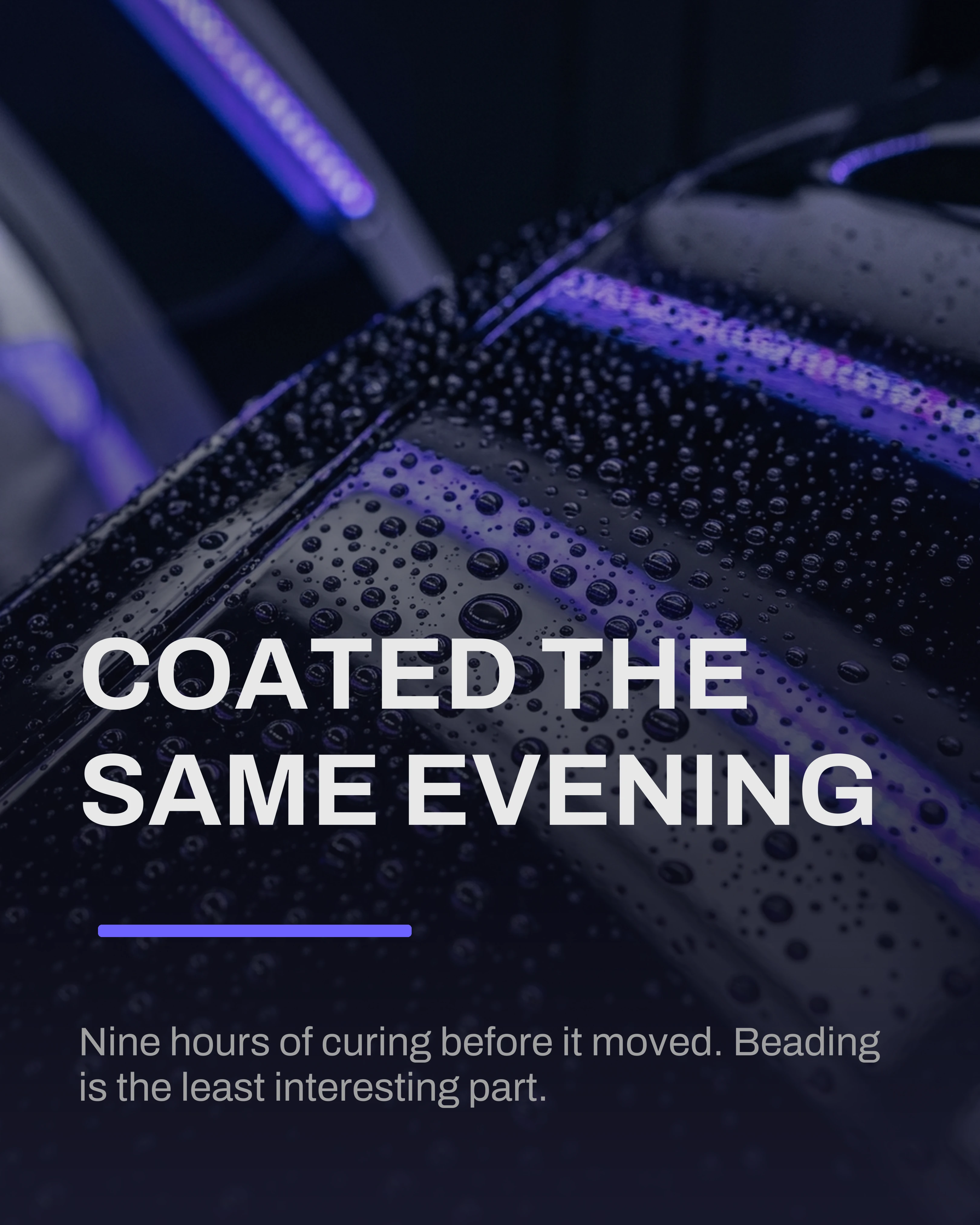
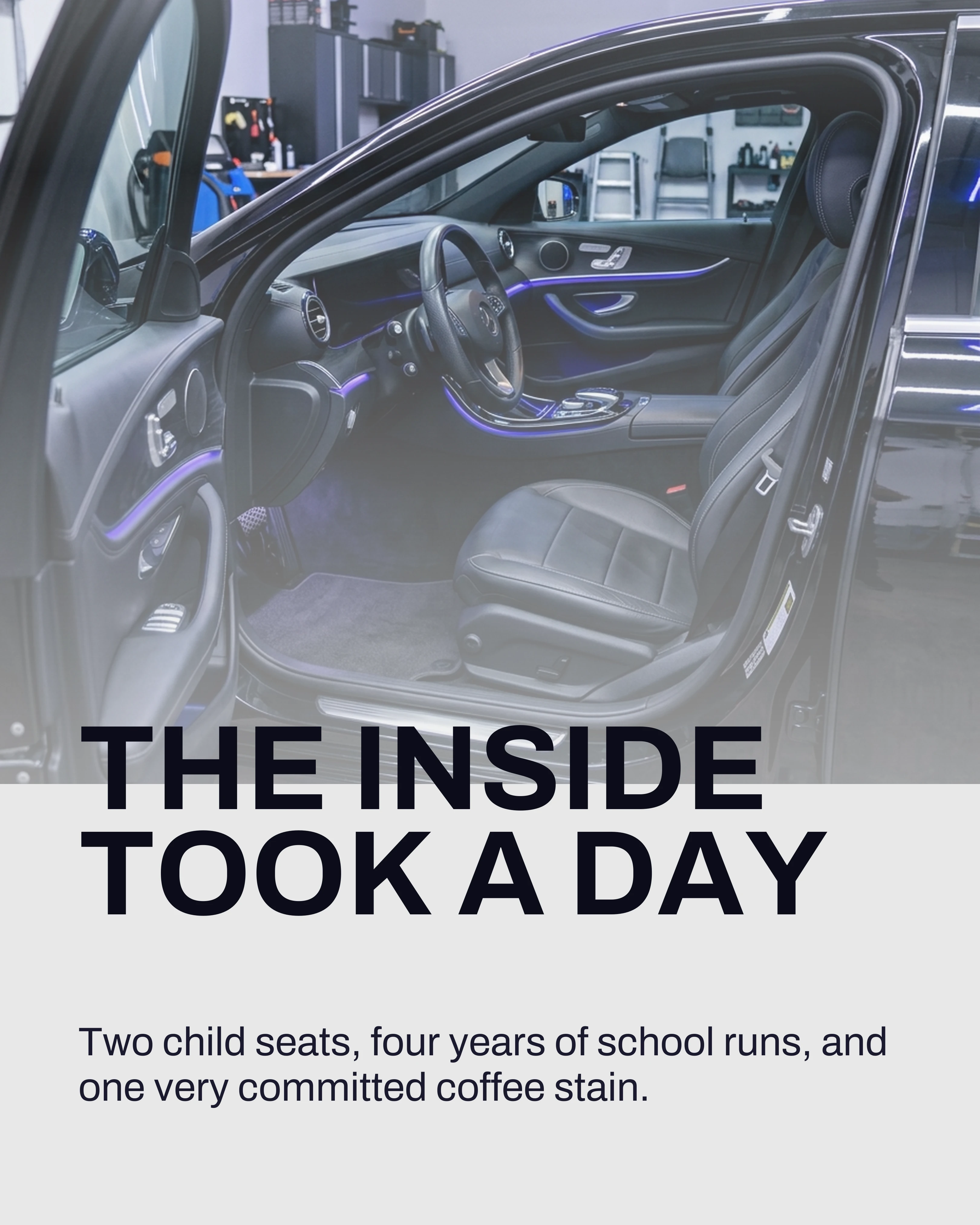
The remaining ideas below carry one representative slide each, so the article stays readable rather than becoming a gallery.
2. What a Swirl Mark Actually Is
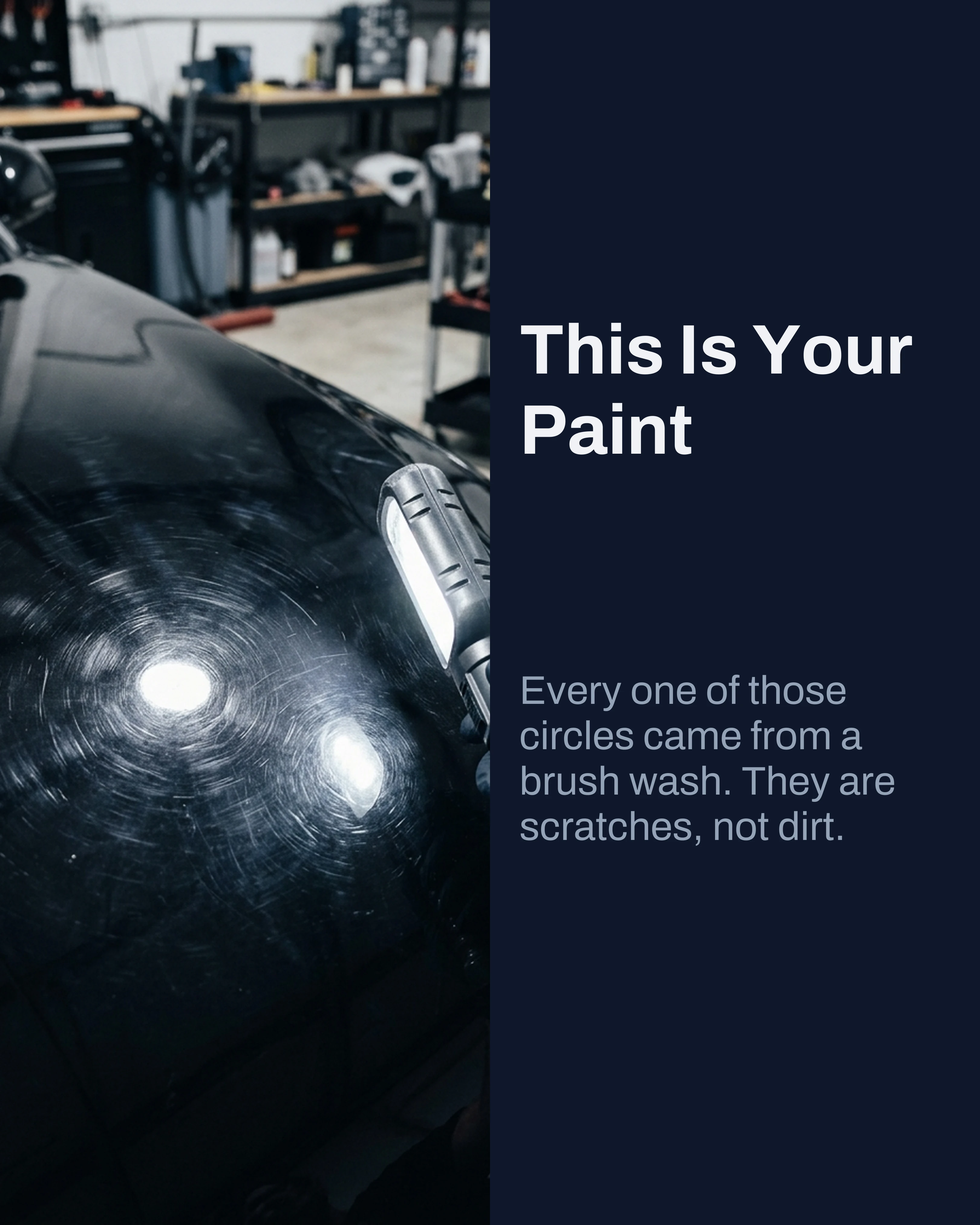
An education post that doubles as a sales post. Most customers have never seen their own paint under a proper light and have no idea it is covered in fine scratches from automatic washes.
Show the light, show the swirls, explain where they come from. This is the post that makes someone walk out to their driveway with a torch, and the ones who do that book.
3. Ceramic Coating, Honestly
Coating content is full of exaggeration, which is exactly why an honest post stands out. What it does, what it does not do, how long it realistically lasts, and what maintenance it still requires.
Being the detailer who says “this will not stop a stone chip” builds more trust than any amount of water-beading footage.

4. The Wheels-Off Detail
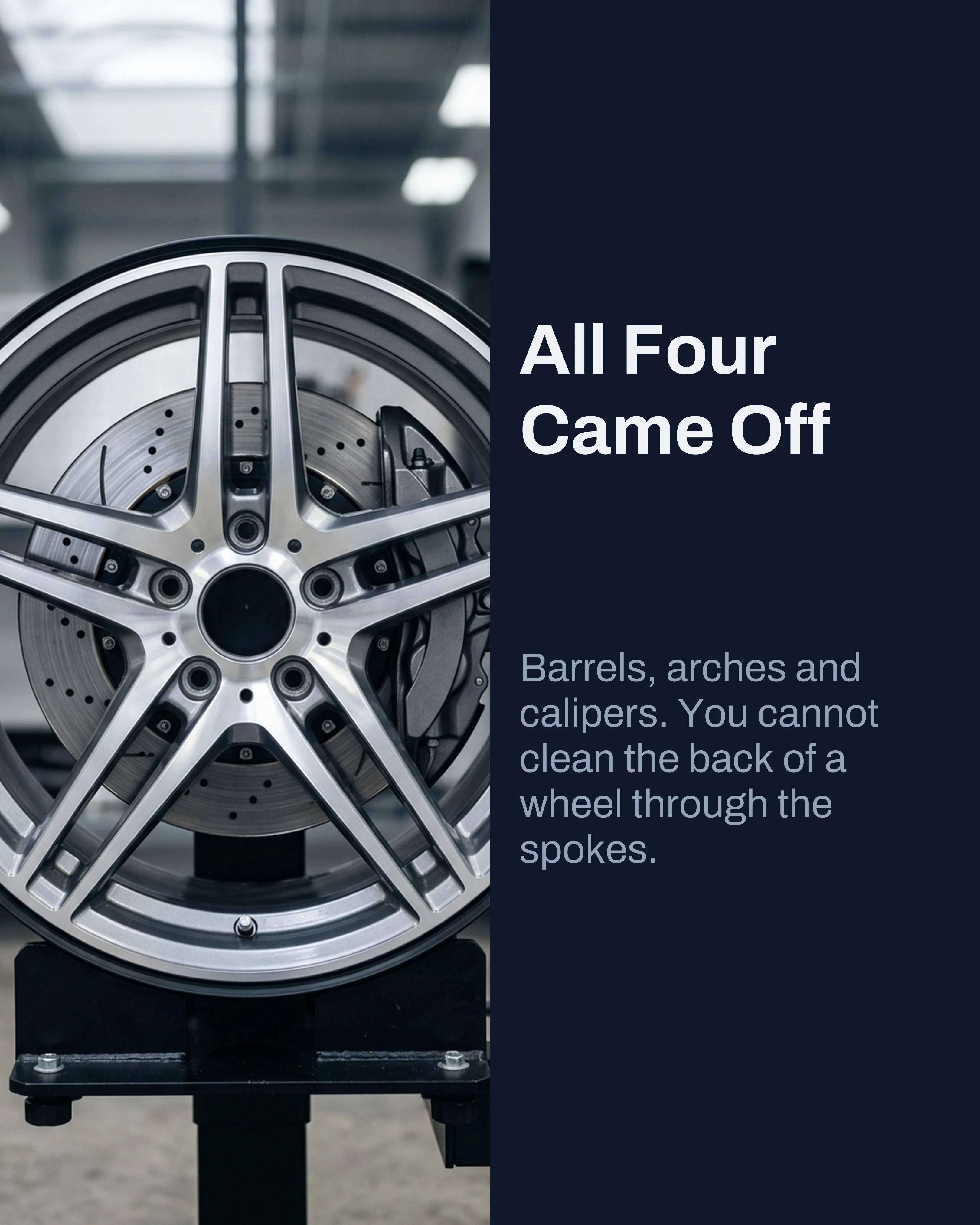
Wheels-off work is the clearest visual demonstration of thoroughness available to a detailer, and it separates you instantly from anyone doing a quick exterior wash. Barrels, arches, calipers.
It is also the easiest upsell to explain visually, because the difference between “cleaned wheels” and “wheels removed and cleaned” needs no words at all.
5. What It Costs and Why
Publish your tiers with what each one includes and the hours involved. Detailers resist this because they fear being compared on price, but the comparison is happening anyway and currently you are not in the room for it.
Hours are the number that changes the conversation. “Two-stage correction, eighteen hours” reframes the price from expensive to obvious.
6. How to Not Undo It
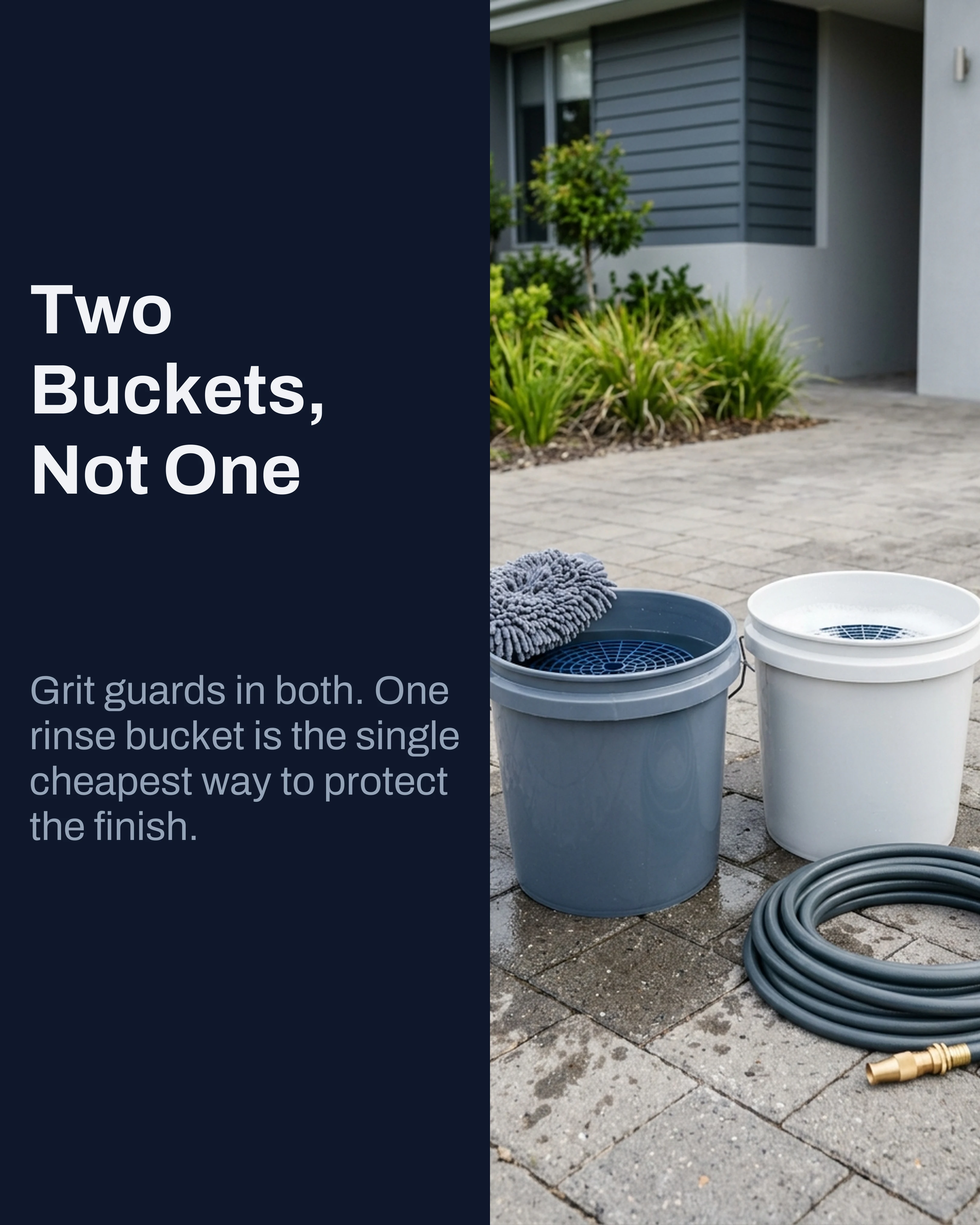
A maintenance post protects your work and creates repeat business. Two-bucket method, drying towels, what an automatic wash does to a freshly corrected car.
This is genuinely useful to the customer and quietly ensures the car still looks good in six months, which is when they recommend you to someone.
7. The Interior Rescue
Interiors are underused in detailing content and they perform well, because the before state is genuinely shocking in a way exterior paint rarely is. Child seats, spilled coffee, pet hair, four years of a work van.
Interior posts also reach a different buyer — someone selling a car, or someone who has simply given up on their own.
Palette and Tone for Detailing Content
Dark palettes are the obvious fit and the correct one. Midnight and Slate both read as a professional bay under LED lighting, and dark backgrounds let reflections and gloss carry the image instead of competing with a bright frame. If you work mostly on classics or want a warmer feel, Warm suits garage and workshop settings.
On typography, industrial and confident works: Archivo, Oswald, and Space Grotesk all look right on automotive content and stay legible on a phone. Avoid anything rounded or soft — it undercuts the precision you are selling.
On tone, resist enthusiast jargon. Talking about DA versus rotary, cut and finish pads, and LSP options impresses other detailers and loses customers. Say what it does. “This removes the scratches rather than filling them” is worth more than any product name.
And always show the lighting. Half the credibility of a detailing post comes from the viewer understanding that you are inspecting the paint under conditions their driveway does not have.
How Carousel Helps Between Jobs
You are photographing on a phone, in a bay, between stages, with wet hands. Carousel turns a handful of shots and a few notes into a structured post in minutes, with Before-After-Bridge and This or That frameworks ready for correction sequences and package comparisons. Save a Midnight or Slate brand kit once and every job post looks like it came from the same operation, even the ones you build while a panel is curing.
Key Takeaways
- A shiny after photo proves nothing. Defect, process, result is the only sequence that justifies a price.
- The full correction post is your flagship. Build it out to nine slides and lead with the damage.
- Show swirl marks under a light — that single post sends people out to inspect their own paint.
- Publish tiers with hours included. Hours reframe price better than any feature list.
- Use Midnight or Slate, industrial typography, and drop the enthusiast jargon.
Create your first carousel in 60 seconds — free
Pick a template, paste your text, export. It's that simple. No design skills needed.
Download Carousel